

How to Choose Heated Boots for Winter Fishing
Quick Summary
Heated boots add warmth on top of good insulation and waterproofing, which is what keeps winter fishing comfortable. Choose them by matching the boot to your style: ice fishing favors strong insulation and a high shaft, wading favors waterproofing, and kayak fishing favors a comfortable fit in a small space. Heat can't fix wet feet or replace insulation, so get those right first.
- Heat adds warmth but cannot replace insulation or waterproofing.
- Match your boot to ice fishing, wading or kayak fishing.
- A tall shaft keeps snow and slush out better than a low one.
- Moisture from sweat can chill feet as much as outside water.
- Try boots on with the socks you will actually wear.
Table of Contents
- Why Cold Feet Cut Winter Fishing Short
- How Heated Boots Work and What They Can and Cannot Do
- Matching Heated Boots to Your Style: Ice, Wading or Kayak
- Waterproofing, Insulation and Breathability Compared
- Fit, Sock Thickness and Traction on Ice
- Battery Life, Charging and Weight for Active and Stationary Fishing
- Best Practices for Winter Fishing Comfort on the Ice
- Getting Started With Your Heated Boots
- Frequently Asked Questions
Why Cold Feet Cut Winter Fishing Short
Cold feet end more winter fishing trips than bad luck does.
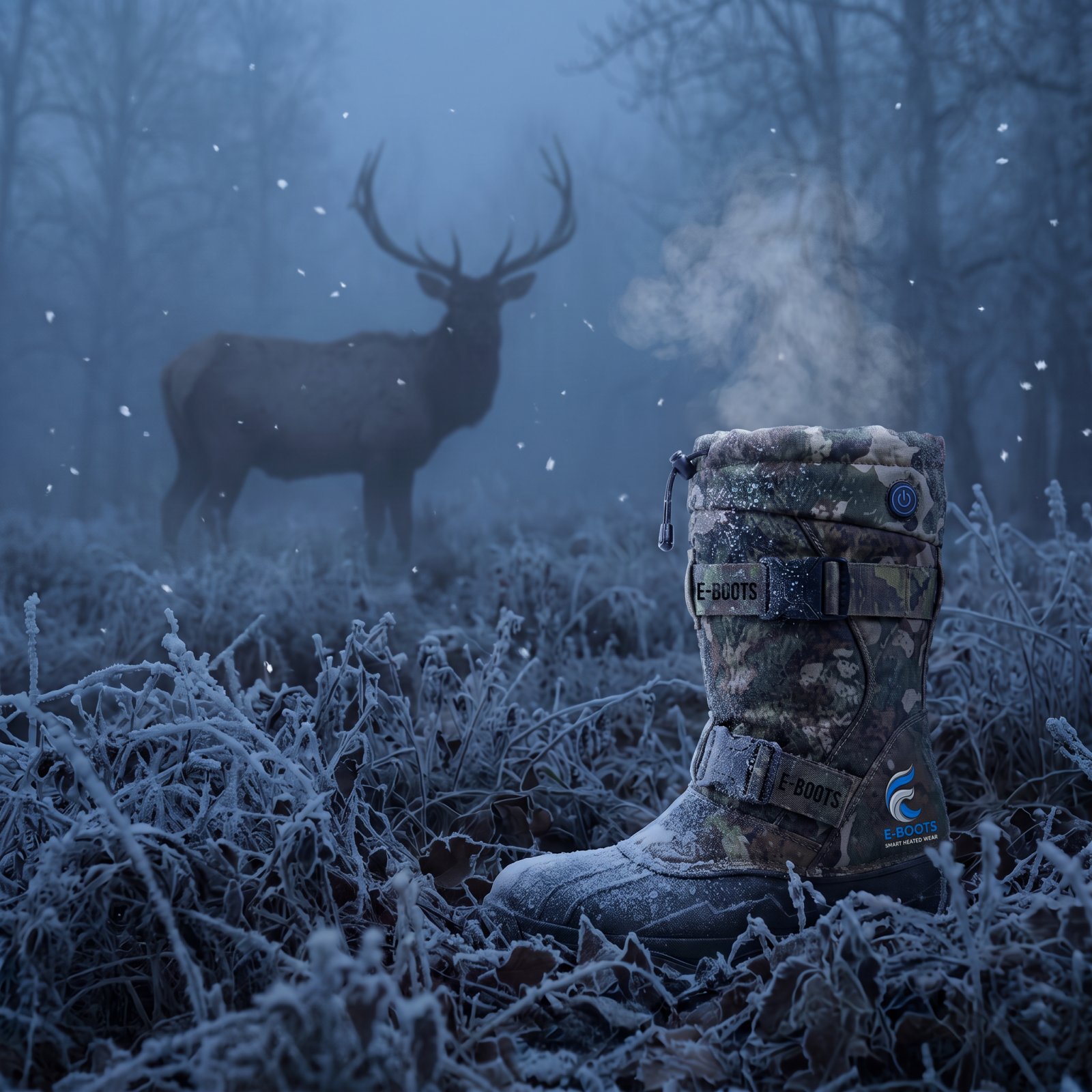
Winter fishing also asks a lot of your feet. You often stand still on ice or sit for long stretches over a hole, and your body loses heat fast when it isn't moving.
This is why footwear matters so much. A good boot keeps your feet warm, dry, and stable. Heated boots add one more option when passive insulation alone isn't enough.
How Heated Boots Work and What They Can and Cannot Do
Heated boots use a small battery and heating elements to add warmth to the foot area.
Heat does not replace good insulation. Experts recommend pairing heated socks or insoles with insulated boots when you need more warmth during stationary activities like ice fishing, according to In-Fisherman's 2026 ice fishing footwear guide.
Here is what heat can and cannot do:
- Can: Add warmth when you sit or stand still for long periods
- Can: Help you stay comfortable when temperatures drop
- Cannot: Fix wet feet caused by leaks or sweat
- Cannot: Replace insulation or waterproofing
- Cannot: Last through an unlimited day without charging
The E-BOOTS™ approach is built around dual-control heating, which lets you adjust warmth on the boot or from the app.
Matching Heated Boots to Your Style: Ice, Wading or Kayak
Ice fishing involves long periods of sitting still on frozen water.
Wading means standing in cold water for hours. Waterproofing matters most here, and the boot should handle moving through current and rough bottoms.
Kayak fishing calls for a boot that fits comfortably in a small space, drains water well, and lets you move your feet while seated.
Think through your typical day before you buy. How much time do you spend moving compared with sitting still?
Waterproofing, Insulation and Breathability Compared
Three features decide how your feet feel at the end of a winter fishing day: waterproofing, insulation, and breathability. They are not independent. Push one and you usually pull on the other two, which is why the best winter fishing boot is a balance rather than a winner in any single column.
| Feature | What It Does | Pros | Cons |
|---|---|---|---|
| Waterproofing | Keeps liquid water out | Protects feet from slush, overflow and spray | Can trap sweat vapor if the membrane is poor |
| Insulation | Slows heat loss from the foot | Holds warmth when you are still | Adds bulk and weight, and can overheat when you move |
| Breathability | Lets moisture vapor escape | Reduces sweat buildup and damp linings | Less effective when the outer shell is soaked |
Waterproofing: membrane, seams and the tall shaft
Waterproofing is not one feature, it is a system.
For winter fishing, shaft height matters as much as the membrane. Snow, slush and overflow come in over the top of a low boot far more often than through the side.
Watch out: waterproof and breathable are not the same claim. A boot that is fully waterproof but poorly breathable will keep water out and trap sweat in, and a damp lining is a cold lining.
Insulation: why the temperature rating is a starting point, not an answer
Insulation slows heat loss. It does not create heat. That distinction matters because advertised temperature ratings are notoriously loose.
Winter anglers often treat the rating as a floor, not a promise. A boot will feel different when you are stationary in wind than when you are moving. Insulation types vary too, and each suits different conditions. The right choice depends on whether your feet run wet or dry and how much you move.
Breathability and moisture management: the part most buyers skip
Moisture is the main cause of cold feet in winter boots, and it comes from two directions: outside water getting in, and sweat vapor getting trapped. The second is the one people underestimate. Your feet produce sweat all day, and if that vapor cannot escape, it condenses in the lining and socks and pulls warmth away from your skin.
Managing sweat at the source helps. Pairing a moisture-wicking liner sock against the skin with a wool sock over it can reduce the moisture that reaches the boot lining.
Breathability has limits. In very wet conditions, a highly breathable boot can let water in faster than it lets vapor out. That same balance between warmth and moisture control matters above the boot, where a fishing hoodie can help keep cool-morning layers comfortable without trapping too much dampness.
How the three work together
The best winter fishing footwear treats these as one system. Waterproofing keeps outside water out. Breathability moves inside moisture out. Insulation and heat hold warmth in. If any one fails, the other two are working against a losing battle.
When you compare boots, read past the headline rating and ask three questions: how tall is the shaft, how does the boot manage sweat, and what is the insulation actually made of? Those answers tell you more about a winter fishing day than any single number on the box.
Fit, Sock Thickness and Traction on Ice
Fit affects both warmth and comfort. A boot that is too tight squeezes your feet and reduces blood flow, which makes cold feet worse.
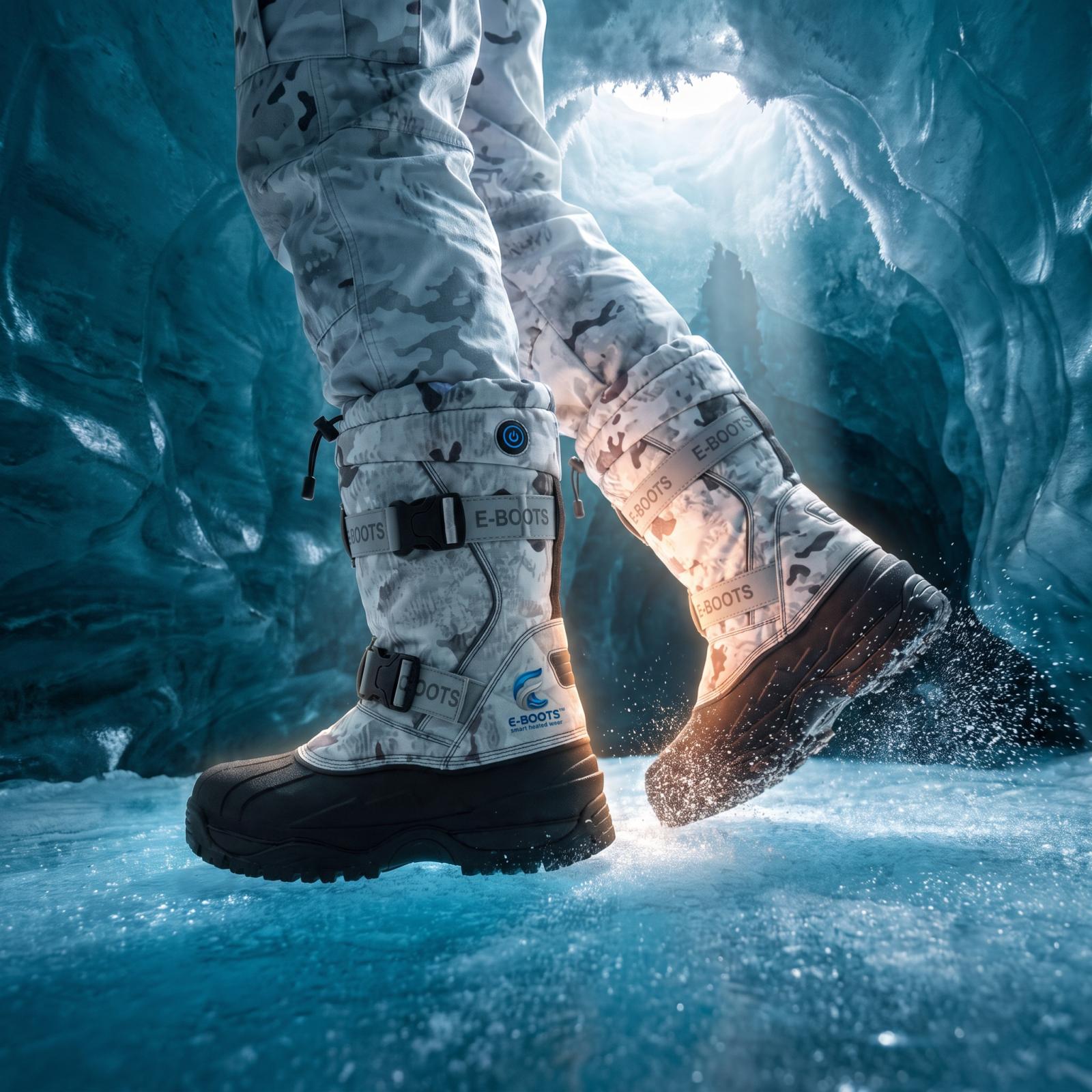
Consider your socks. Thick wool socks add warmth but take up space. Try boots on with the socks you plan to wear on the water or ice.
Traction deserves attention too. For ice fishing, specialized traction aids or studded soles are a useful addition, according to Master Fishing Guide's 2026 winter boot review.
Check these fit points when you try boots on:
- Toes have room to wiggle without hitting the front
- Heel stays in place when you walk
- Ankle feels supported, not pinched
- Sock thickness still leaves comfortable space
Battery Life, Charging and Weight for Active and Stationary Fishing
Most heated-boot guides treat the battery as an afterthought, and that is where winter anglers get caught out. Two things decide how a heated boot behaves on the ice: how the battery copes with cold, and how much boot weight you carry for the kind of fishing you do.
Why cold drains batteries, and what to do about it
Lithium-ion cells, which nearly all heated footwear uses, lose usable capacity as they get cold.
- Start warm. Charge fully the night before and keep the pack at room temperature until you leave. A pack that starts cold begins the day already behind.
- Carry the spare against your body. An inside jacket pocket uses your own core heat to keep a spare pack in its happy range. A pack in an outside cargo pocket sits at ambient temperature all day.
- Match heat setting to the moment. High heat for the first hour while you settle in, then step down once your core is warm. Constant high heat is the fastest way to burn through a pack.
- Plan around your trip length, not the label. If your day runs from dark to dark, assume you will want a second pack or a charging plan for the ride home.
Automated climate regulation is designed to help with this. On the E-BOOTS platform, on-board sensors raise and lower heat as ambient temperature changes, which is designed to hold comfort while protecting battery life.
Watch out: charging a cold pack straight off the ice can be slow or refused by the charger until the cells warm up.
Weight-to-warmth: the trade-off that decides your day
A boot that is wonderful for six hours on a bucket is often miserable for two miles of walking to a remote hole. Weight is the variable most anglers underweight when they buy, and it compounds with every step.
Active fishing (walking to backcountry water, wading, moving between holes across a lake). Every extra ounce is lifted thousands of times.
Mixed days. Most real trips are both. The honest answer is to pick the boot for the worst part of your day.
A useful way to think about it: heated boots let you buy warmth with battery instead of with bulk.
A simple pre-trip checklist
- Charge every pack fully the night before.
- Pack one spare per angler for a full day.
- Keep spares inside your jacket, not in a cargo pocket.
- Decide your heat plan before you leave: high early, step down later.
- Weigh your day honestly: how far will you walk, and how long will you sit?
Best Practices for Winter Fishing Comfort on the Ice
Good habits make a big difference to how your feet feel.
- Dress in layers. Start with a moisture-wicking liner, add a wool sock, and keep your feet dry.
- Keep spare socks. Change them if your feet get damp.
- Move regularly. Shift your weight and wiggle your toes to keep blood flowing.
- Avoid tight laces. Snug is good, but tight laces restrict circulation.
- Pack a warm drink. Warmth from the inside helps your whole body stay comfortable.
- Check your feet often. Numbness is a warning sign. Get off the ice and warm up if your toes stop responding.
These steps work with any boot. Heated boots add to them rather than replacing them.
Getting Started With Your Heated Boots
Start by deciding what matters most for your fishing: warmth for long sits, flexibility for walking, or waterproofing for wet conditions.
When you are ready to look at options, you can explore the full range of E-BOOTS™ boots to see how the heating controls and designs fit different styles of fishing.
If you want to learn more about app-connected boots before you buy, how to choose app-connected boots for winter covers the features worth comparing.
Frequently Asked Questions
Are heated boots worth it for ice fishing?
For stationary fishing on the ice, a heated boot is designed to add warmth that passive insulation alone may not supply, especially when you are sitting still for long periods. Heat helps most when cold feet would otherwise end your session early. Whether the extra warmth is worth the cost depends on how long you fish, how cold it gets where you go, and how much you move between holes. Anglers who walk a lot may find insulation and waterproofing do most of the work, while those who sit for hours often notice the difference more. Pricing depends on model and quantity, so check current options directly on e-boots.com.
How long does battery life last in heated fishing boots?
Battery life depends on the heat setting, the temperature around you and how long the boot runs. Cold weather reduces battery performance in most battery-powered products, so it is sensible to plan for less runtime than you would get in mild conditions. Carry a charged spare or keep the battery warm between sessions if you can. E-BOOTS is designed to adjust heat through its dual-control system and automated climate regulation, which helps manage power use. Check product documentation for specific runtime figures before relying on a particular duration.
Should I choose waterproof or insulated boots for winter fishing?
Both matter, but moisture is one of the main ways heat escapes, so waterproof construction is central to staying warm on the ice. Insulation keeps warmth in once the boot is dry, and breathability helps reduce the sweat that can make your feet cold later. Look for boots that combine a waterproof shell with insulation suited to your conditions and a fit that leaves room for the socks you actually wear. A boot that is waterproof but poorly insulated, or insulated but not waterproof, is likely to disappoint on a wet or slushy day.
Can I use heated insoles or heated socks instead of heated boots?
Heated socks and insoles are a common way anglers add warmth to insulated boots, and they can be a reasonable choice if you already own a good boot. A fully designed heated boot integrates the heat into the footwear, so the heating sits where the boot is built to hold it. Consider how each option fits your boots, how it connects to power, and how easily you can manage the heat while you fish. Either route works best when paired with waterproof, well-fitting footwear.


