

ASTM F2413 Winter Work Boots: A Concept Review
Table of Contents
- What an ASTM F2413 Winter Work Boot Review Can Actually Tell You
- How to Read ASTM F2413 Work Boot Markings Before You Buy
- Composite Toe Winter Work Boots: What Changes in the Cold
- Waterproof Work Boots for Winter: What the Label Does and Does Not Promise
- Heated Work Boots and the Safety Standard: Where They Meet
- Traction, Insulation and Fit: The Winter Details Reviews Skip
- How to Judge a Winter Work Boot Review Before You Trust It
- Frequently Asked Questions
Last Updated: October 16, 2026
What an ASTM F2413 Winter Work Boot Review Can Actually Tell You
When you're reading reviews of winter work boots, you're looking for something specific: will these boots keep my feet warm through a long shift in the cold, and will they protect me if something goes wrong on the jobsite? The problem is that most reviews skip the part that actually matters. They talk about comfort and waterproofing without explaining what ASTM F2413 means, they compare boots without mentioning how cold changes what a safety toe can do, and they never address the gap between what a certification guarantees and what you actually experience in January.
This guide explains what ASTM F2413 winter work boots reviews can and cannot tell you. We'll walk through how to read the markings on a boot, what happens to composite and steel toes in extreme cold, how waterproofing actually works in winter conditions, and what reviewers consistently get wrong about heated boots and safety standards. By the end, you'll know exactly which details matter and which ones are just noise.
How to Read ASTM F2413 Work Boot Markings Before You Buy
ASTM F2413 is the standard that governs protective footwear in North America. When you see that marking on a boot, it means the toe has been tested to withstand impact and compression forces.
Look for the ASTM F2413 stamp inside the boot, usually on the tongue or the inner heel. Next to it, you'll see a code. That code matters. A boot marked M means it has metatarsal protection, which shields the bones across the top of your foot from objects falling from above.
The second thing to check is the electrical hazard rating. You might see EH on the marking. That means the sole is designed to help reduce the risk of electrical shock. If you work around live electrical equipment, that matters.
Read the review carefully to see whether the reviewer actually mentions these codes. If they say a boot is ASTM F2413 approved but never mention what that approval covers, they're not giving you the information you need.
Composite Toe Winter Work Boots: What Changes in the Cold
Composite toe boots are made from materials like carbon fiber or plastic rather than steel. They're lighter, they don't conduct cold the way steel does, and they're increasingly common in winter work environments. But winter changes how composite toes perform, and most reviews don't address this.
In warm conditions, composite and steel toes perform similarly under impact and compression tests. Both meet ASTM F2413 standards. Both protect your foot if something heavy lands on it. The difference emerges when the temperature drops. Composite materials become more brittle in extreme cold. That doesn't mean they fail the safety standard, but it does mean the way they absorb and distribute impact force changes slightly. A composite toe at 30 degrees below zero behaves differently than one at 50 degrees above.
Steel toes, by contrast, remain structurally consistent across temperature ranges. They don't become more or less brittle. What they do is conduct cold directly into the boot. If you're standing in snow for hours, a steel toe pulls warmth away from your foot faster than a composite toe does. That's the real winter trade-off, and it's worth understanding before you read a review.
Steel Versus Composite: The Cold-Weather Trade-Off
Here's the decision most winter work boot reviews skip: steel toes are more thermally conductive, which means they transfer cold into the boot. Composite toes insulate better and don't pull heat away from your foot. For industrial crews working long shifts in extreme cold, that matters more than the minor difference in impact performance.
A review that recommends steel toes for winter work without mentioning thermal conductivity is missing the point. The boot meets the safety standard either way, but your foot's experience is different. If you're wearing insulated socks and the boot has good insulation overall, a steel toe is manageable. If you're in a heated boot with climate regulation, the thermal conductivity of the toe becomes even less relevant because the system is actively managing warmth.
The trade-off is real, and the best reviews acknowledge it. They don't just say "composite is better" or "steel is stronger." They explain the actual difference and help you decide based on your work environment and the other features the boot offers.
Waterproof Work Boots for Winter: What the Label Does and Does Not Promise
Every winter work boot review mentions waterproofing. Most reviews treat it as a binary: waterproof or not. That's not how it works. A waterproof label tells you the boot resists water under specific conditions, but it doesn't guarantee your feet stay dry in every situation.
A boot marked waterproof has been tested with water pressure at a certain level for a certain time. It passed that test. But waterproofing can degrade with use, especially in extreme cold where materials can become more rigid and seams can crack.
Winter work involves slush, mud, standing water, and constant moisture. Waterproofing helps, but it's not the whole story. The seams matter. The construction matters. How the boot handles repeated freeze-thaw cycles matters.
Also watch for reviews that promise waterproofing will keep your feet completely dry. That's not realistic. Waterproofing is designed to help reduce water entry, but if you're wading through deep snow or standing in slush all day, some moisture may find its way in. The goal is to delay that and minimize it, not to create a perfect seal.
Heated Work Boots and the Safety Standard: Where They Meet
This is where the conversation gets interesting. Heated boots are becoming more common in winter work environments, and reviewers often treat heating and safety certification as separate topics. They're not. The ASTM F2413 standard applies to heated boots the same way it applies to unheated ones.
What heating adds is a capability layer on top of the safety standard. A heated boot can be ASTM F2413 compliant and also offer dual-control heating that adjusts warmth on the boot itself or through an app. It can include climate regulation where on-board sensors raise and lower heat based on ambient temperature.
A review that conflates heated boots with "safer" boots is misleading. Heating doesn't make a boot safer. It is designed to help make it warmer. Safety comes from the toe protection, the insulation, the sole design, and the structural integrity of the boot itself.
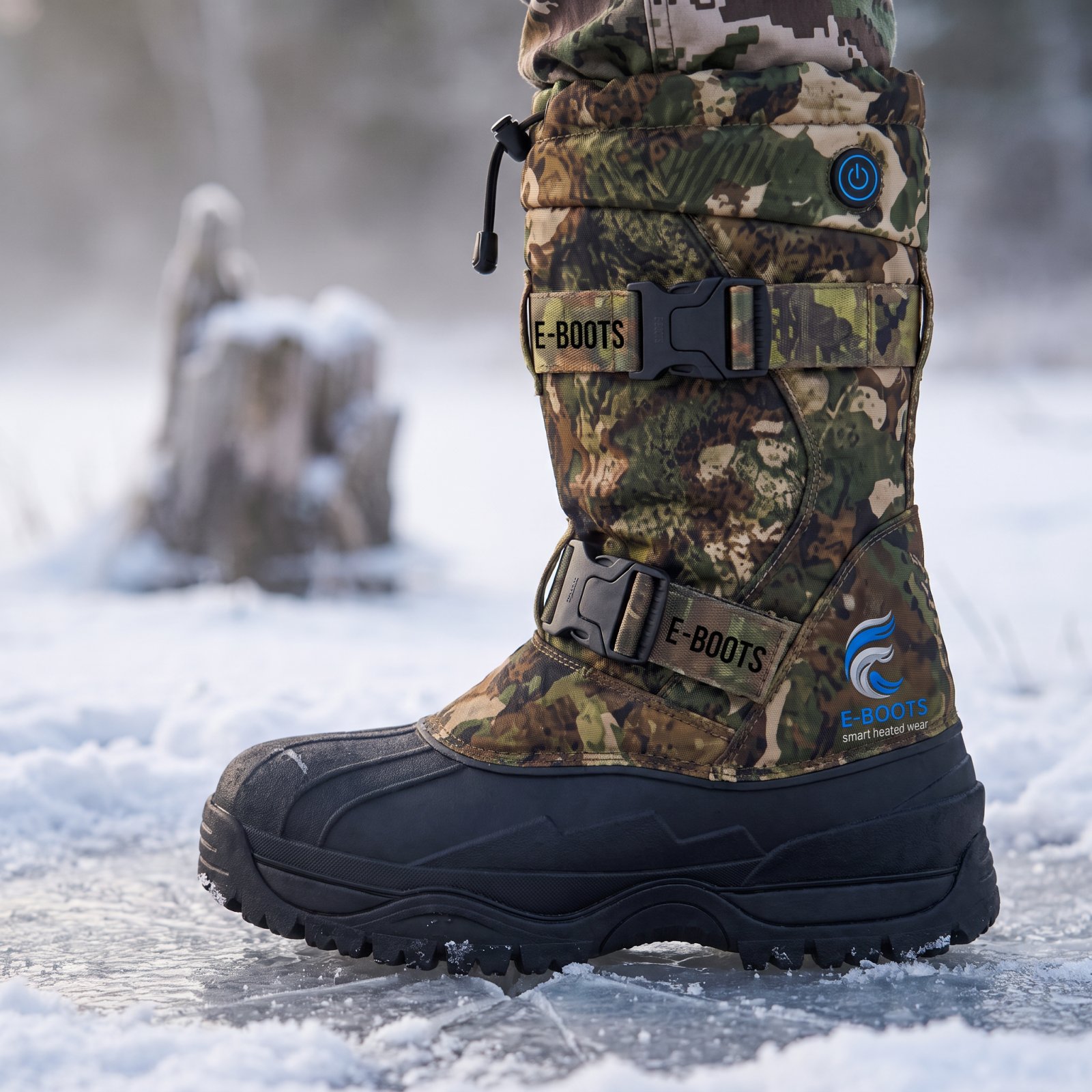
The best reviews separate these conversations. They explain what ASTM F2413 covers, then explain what heating technology adds to the experience. E-BOOTS™ boots in the work and safety line, like the ForgeTherm Pro and Ironclad WorkOne, both carry composite protective toes and are built to meet the standards industrial crews need.
Traction, Insulation and Fit: The Winter Details Reviews Skip
Most reviews mention traction and insulation separately, as if they're independent features. They're not. In winter, they interact. A boot with aggressive tread but poor insulation leaves your feet cold while you're gripping icy surfaces. A boot with excellent insulation but smooth soles puts you at risk of slipping.
Traction matters on ice, snow, slush, and muddy terrain. The outsole design, the tread pattern, and the material all factor in. A review should tell you what kind of traction to expect on different surfaces. "Good traction" is vague. "Aggressive tread designed for snow and ice" is specific.
Insulation is typically measured in grams, often 400g, 600g, or 800g of materials like Thinsulate. Higher numbers are designed to provide more insulation, but they can also mean heavier boots.
Fit is where reviews often fail completely. A boot that fits perfectly for one person might be too narrow or too loose for another. The best reviews mention fit range, toe box shape, and how the boot sits over layers. In winter, you're wearing thicker socks and potentially multiple layers.
How to Judge a Winter Work Boot Review Before You Trust It
Before you take a review at face value, ask these questions: Does it explain what ASTM F2413 actually covers? Does it separate safety certification from comfort features like heating? Does it address how winter conditions change boot performance?
A trustworthy review acknowledges limitations. It says what the boot does well and where it might not be the best fit. It explains trade-offs, like the thermal conductivity of steel toes versus the lighter weight of composite. It doesn't promise outcomes it can't guarantee.
Also look at whether the review addresses your specific situation. A review written for general construction work might not account for oilfield conditions or utility work. A review aimed at outdoor hikers won't address the needs of industrial crews.
Finally, check whether the review mentions the standards that apply. If it never references ASTM F2413, CSA Z195, or other relevant certifications, it's treating the boots as casual footwear rather than safety equipment. That's a red flag.
Choosing the right winter work boot means understanding what reviews can actually tell you and what you need to figure out on your own. The standards matter. The materials matter. The way features interact matters.
Frequently Asked Questions
What does ASTM F2413 mean for work boots?
ASTM F2413 is the North American performance standard that protective footwear is built to meet. It sets requirements for impact and compression protection at the toe, and adds optional categories such as metatarsal protection, electrical hazard protection, static dissipation and conductive properties. A boot that meets it carries a permanent marking inside the tongue or lining showing the standard, the year, the gender and the protection codes. When you shop for winter work boots, that marking is the first thing to check, because a boot can look rugged without being certified at all.
Are ASTM F2413 boots suitable for winter work?
The standard covers protection, not warmth. A boot can carry an ASTM F2413 marking and still have no insulation, no waterproof membrane and a sole that hardens in the cold. For winter, treat the certification as the floor and then check separately for insulation, a waterproof construction, a lugged outsole and enough room in the toe box for a thicker sock. If your employer requires CSA Z195 in Canada, confirm both markings rather than assuming one covers the other.
Are composite toe winter work boots a good choice for cold weather?
Composite toe caps do not conduct cold the way steel does, so they are often the more comfortable choice when the temperature drops. They are also lighter, which matters over a long shift, and they do not set off metal detectors. The trade-off is bulk: composite caps are thicker, so the toe box can feel roomier or clunkier depending on the last. Try the boot with the socks you actually wear and check that your toes still clear the cap.
Do heated work boots need to meet ASTM F2413?
If the boot is sold as protective footwear for a jobsite, it should carry the marking, and heating elements do not replace that. Check where the battery and wiring sit, whether they interfere with the fit or the lining, and how the heat is controlled. On E-BOOTS models, warmth is adjusted on the boot itself or through the app, with sensors regulating output as the ambient temperature changes. Certification detail belongs on the product spec sheet, so ask for it there.
How can I check whether a work boot meets ASTM F2413?
Look inside the boot. Compliant footwear carries a permanent label on the tongue, lining or sock liner showing the standard number and year, the manufacturer, the size and the protection codes. If you cannot find it, the boot is not marked as compliant, no matter what the product page says. For crew purchases, ask the supplier for the marking and the current specification sheet in writing before you order, and keep that record with your safety documentation.


