

Heated Boots vs Heated Insoles for Winter Work
Table of Contents
- Heated Boots vs Heated Insoles: Core Differences
- Heated Safety Boots for Construction and Winter Work
- Battery Life of Heated Insoles and Heated Boots
- Heat Coverage and Warmth Distribution
- How to Keep Feet Warm in Construction Work
- Heated Insoles for Work Boots: Compatibility and Installation
- Pros and Cons: Which Option Wins for Winter Work
- Frequently Asked Questions
Last Updated: October 16, 2026
Heated Boots vs Heated Insoles: Core Differences
When winter work keeps your feet in freezing conditions for hours, the choice between heated boots and heated insoles for winter work can mean the difference between a productive shift and one cut short by cold.
Both options use heating elements powered by rechargeable batteries, but they work differently and suit different needs. Heated boots integrate heating technology directly into the boot structure.
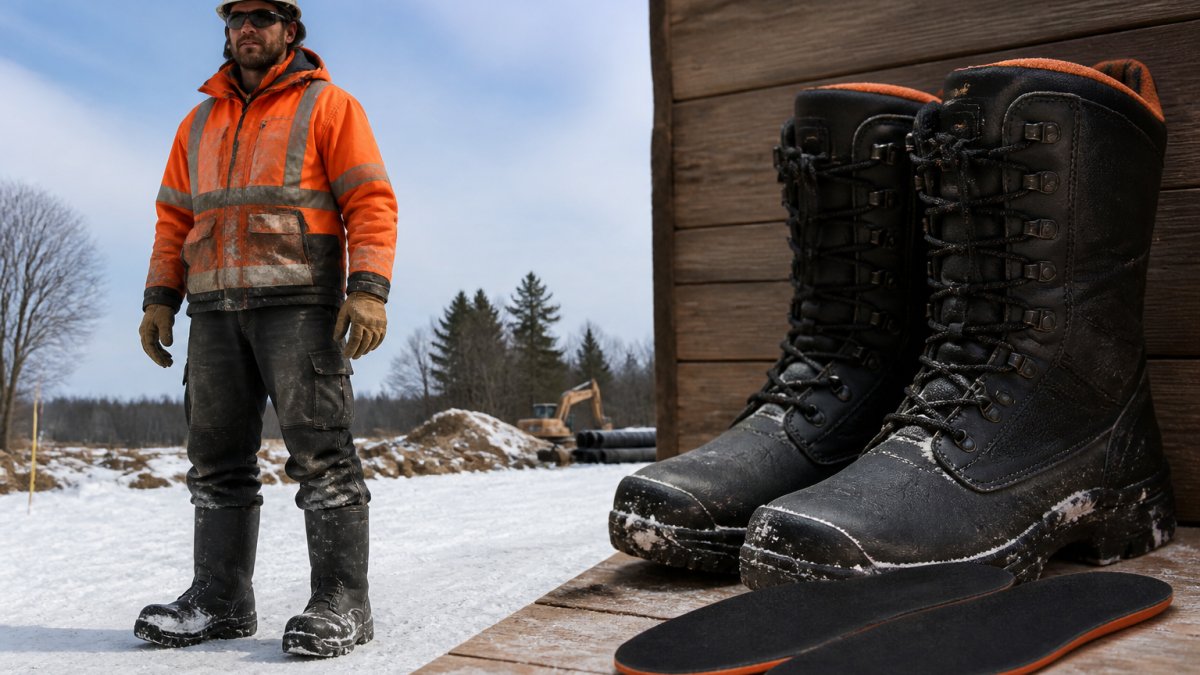
How Heated Boots Work
Heated boots contain built-in heating elements woven into the sole, insole, or liner. Battery packs typically attach to the outside of the boot or fit inside the boot shaft. Power flows directly to heating zones that warm your feet from the ground up.
The heating elements in quality boots distribute warmth across the sole and sometimes extend up the sides of the foot. This design eliminates gaps where cold could seep in. Because the heating system is integrated, there's no extra bulk or compatibility concerns, the boot is engineered as a complete thermal unit.
How Heated Insoles Work
Heated insoles are thin, battery-powered devices that slip into your regular work boots. The heating elements sit in the insole material, warming your foot from below. Battery packs connect via a thin wire and typically clip to your boot shaft or fit in a pocket on your pants.
The key advantage: you use insoles with boots you already own. No need to buy entirely new footwear. The insoles are removable, so you can swap them between different pairs of boots or take them out for cleaning and maintenance.
Heated Safety Boots for Construction and Winter Work
Construction and industrial work demands more than warmth, your footwear must meet safety standards. If you work in environments where foot protection is mandatory, heated safety boots become a critical consideration that regular heated insoles cannot address.
Safety Certification and CSA Z195 Standards
CSA Z195 is the Canadian standard for protective footwear used in construction, industrial, and utility work. Boots meeting this standard include steel or composite toe caps that protect against impact and crushing injuries. ASTM F2413 is the equivalent U.S. standard.
Heated insoles cannot provide this protection. If your job requires CSA Z195 or ASTM F2413 certification, you need safety boots, and heated safety boots combine both thermal comfort and protective standards in one product. E-BOOTS™ heated safety boots meet these certifications, ensuring your feet stay both warm and protected.
Fit and Comfort During Long Shifts
A boot that protects your toes but crushes your arch over eight hours isn't a solution. Safety boots often feel bulkier than regular footwear, which raises a practical question: will adding heating technology make them uncomfortable?
Quality heated safety boots balance protection with comfort. Proper insole cushioning, moisture-wicking liners, and correct sizing matter as much as the heating system. During long shifts, your feet swell slightly and circulation changes. Boots that fit well in the morning might feel tight by hour six.
Battery Life of Heated Insoles and Heated Boots
Battery performance is where many workers get disappointed. A heating system that dies halfway through your shift leaves you colder than if you'd never used it at all. Understanding realistic battery life prevents this problem.
Runtime on a Single Charge
Heated boots and insoles typically run 6-10 hours on a full charge, depending on heat setting and battery capacity. Higher heat settings drain batteries faster. Running at maximum temperature might give you 4-5 hours. Running at a lower, sustainable setting often extends runtime to 8-10 hours.
Real-world conditions matter. Cold temperatures reduce battery efficiency slightly. Moisture and wet conditions don't typically affect lithium batteries in sealed packs, but extreme cold can reduce output temporarily. This is why checking product specifications for your actual shift length is essential.
Temperature Control and Heat Settings
Most quality heated boots and insoles offer multiple heat settings, typically three to five levels. Lower settings preserve battery life. Higher settings deliver faster warmth but drain batteries quicker. Some models include app-controlled temperature adjustment, letting you fine-tune warmth without stopping work.
The best systems let you set different temperatures for different zones. Your toes might need more warmth than your arch. Adjustable heat distribution means you're not overheating some areas while others stay cold.
Heat Coverage and Warmth Distribution
Not all warmth is equal. Where the heat actually reaches your foot determines whether you stay comfortable or develop cold spots that make your whole foot feel chilled.
Toe Warmth and Sole Coverage
Your toes are the first part of your foot to go numb in cold conditions because they're farthest from your core body heat. Effective heated boots and insoles prioritize toe coverage. The heating elements should extend all the way to the toe box, not stop at mid-foot.
Sole coverage matters equally. Your foot's sole has fewer nerve endings than your toes, but it's in constant contact with cold ground. Heated insoles that warm the entire sole from heel to toe provide more balanced comfort than those that only heat the arch or heel area.
Lower Leg and Ankle Warmth
Some heated boots extend heating elements up the ankle or lower leg. This is valuable for work where you're standing in snow or water for extended periods. However, most heated insoles only warm the foot itself, not the ankle. If you need ankle warmth, heated boots with extended coverage are the better choice. Pairing heated insoles with insulated, waterproof work boots can still work well if your boot's insulation is sufficient for your conditions.
How to Keep Feet Warm in Construction Work
Heating technology is one tool, but it works best as part of a complete cold-weather strategy. Construction workers in extreme conditions often layer multiple approaches.
Choosing Between Heated Boots and Heated Insoles for Work Boots
The decision comes down to your specific situation.
Choose heated insoles if you already own quality work boots, want to test heated technology before committing to new boots, or need flexibility to move insoles between different pairs of footwear.
Cost considerations matter too. Heated insoles typically cost less than heated boots, but that gap narrows when you factor in the cost of the quality work boots you'll need to pair with them.
Durability and Maintenance in Wet, Cold Conditions
Waterproofing becomes critical in winter work. Your heating system is useless if water seeps in and damages the battery or heating elements. Quality heated boots use sealed battery compartments and waterproof heating circuits.
Maintenance in wet conditions means drying your boots properly after work. Never use direct heat like a radiator or fire, this damages the heating elements and battery. Air dry at room temperature. For heated insoles, remove them and dry separately. Check battery connections regularly for corrosion, especially if you're working in salt-treated areas or around water.
Heated Insoles for Work Boots: Compatibility and Installation
If you choose heated insoles, understanding how they fit into your existing safety boots prevents frustration and poor performance.
Fit and Thickness Inside Safety Footwear
Heated insoles add thickness to your boot's interior. Most quality insoles are 4-6mm thick, which is noticeable. If your work boots already fit snugly, adding insoles might make them too tight, cutting off circulation and defeating the purpose of the heating.
Test fit before committing. Remove the original insole and try the heated insole in place. Your foot should have roughly the same amount of space as before. If the boot feels cramped, you might need to size up or choose thinner heated insoles.
Waterproofing and Durability
Heated insoles in construction environments face constant moisture, mud, and harsh conditions. Durability depends on waterproof construction and proper maintenance. Quality insoles use sealed battery packs and water-resistant heating elements. However, they're still more exposed than integrated boot heating, especially if your work boots develop cracks or leaks.
After wet conditions, remove insoles and dry them separately. Don't leave them in wet boots overnight, moisture promotes corrosion and mold. With proper care, quality heated insoles last multiple seasons.
Pros and Cons: Which Option Wins for Winter Work
| Feature | Heated Boots | Heated Insoles |
|---|---|---|
| Safety Certification | CSA Z195/ASTM F2413 available | Not applicable |
| Integrated Design | Built-in, no compatibility issues | Requires compatible boots |
| Battery Life | 6-10 hours typical | 6-10 hours typical |
| Heat Coverage | Full foot and sometimes ankle | Full foot, limited ankle |
| Upfront Cost | Higher initial investment | Lower initial cost |
| Flexibility | Fixed to one boot pair | Movable between boots |
| Waterproofing | Sealed system | Depends on boot integrity |
| Maintenance | Integrated care | Separate drying required |
When Heated Boots Make Sense
Heated boots are the right choice for construction workers and industrial professionals who need CSA Z195 or ASTM F2413 safety certification. They're also ideal for extreme cold environments where integrated thermal management and durability matter more than cost. If you're working 10+ hour shifts in sub-zero conditions, heated boots eliminate compatibility concerns and provide reliable, purpose-built warmth.
E-BOOTS™ heated safety boots combine integrated heating technology with app connectivity and rugged waterproof construction, designed specifically for workers facing the harshest conditions. You get safety certification, thermal management, and durability in one system engineered for extreme winter work.
When Heated Insoles Offer Better Value
Heated insoles make sense if you already own quality work boots that fit well and provide adequate insulation. They're a lower-cost entry point to heated foot technology.
Insoles offer flexibility. You can move them between different pairs of boots depending on the day's conditions. For workers managing multiple roles or weather conditions, this adaptability has real value.
Cold feet don't have to end your workday. The choice between heated boots and heated insoles depends on your safety requirements, shift length, and existing gear.
E-BOOTS™ heated safety boots integrate app-controlled thermal management with CSA Z195 and ASTM F2413 protection, delivering both warmth and certified safety for professional winter work. CSA Z195 safety standards for protective footwear ensure your feet stay protected.
Ready to eliminate cold feet from your winter work? Join the E-BOOTS™ waitlist and discover how integrated heating technology and safety certification work together to keep you warm and protected through the longest, coldest shifts.
Frequently Asked Questions
Do heated insoles actually work in work boots?
Yes, heated insoles for work boots deliver measurable warmth when properly installed inside safety-rated footwear. They generate heat through rechargeable battery elements and distribute warmth across the sole and lower foot. Effectiveness depends on battery life, heat settings, and insole contact with your foot. Most workers report noticeable warmth improvement, though fit and thickness matter, insoles must sit flat without bunching or reducing boot space. Waterproof models hold up in wet construction conditions when maintained correctly.
What's the difference between heated boots and heated insoles for winter work?
Heated boots integrate heating technology directly into the boot structure, providing consistent warmth across the sole and sometimes the lower leg. Heated insoles are removable, battery-powered pads that sit inside existing work boots. Heated boots offer better heat distribution and don't reduce boot interior space, but heated insoles are cheaper, more portable, and work with boots you already own. For CSA Z195 and ASTM F2413 safety-rated work, integrated heated boots ensure heating elements don't compromise safety certification, while insoles require careful compatibility checks.
How long does the battery life of heated insoles last on a construction shift?
Battery life for heated insoles typically ranges from 3 to 8 hours depending on heat setting and battery capacity. High heat settings drain batteries faster (3-4 hours), while low settings extend runtime to 6-8 hours. For a full construction shift in sub-zero conditions, medium settings often balance warmth and endurance. Always verify runtime claims before purchase. Having a backup pair or portable charger prevents being left without heat mid-shift.
Can heated insoles fit inside CSA-rated safety boots without affecting the fit?
Heated insoles can fit inside safety boots, but thickness is critical. Most heated insoles add 3-5mm of bulk, which can tighten the fit in already snug work boots. This pressure may cause discomfort during long shifts or reduce circulation, ironically making feet colder. For best results, choose thinner insole designs and ensure your safety boots have adequate interior volume. Test fit before committing to a full shift. Integrated heated safety boots eliminate this problem by design, offering warmth without sacrificing the fit and foot pressure distribution that CSA Z195 standards require.


