

Heated Boots vs Heated Socks: Which Wins for Winter
Table of Contents
- Heated Boots vs Heated Socks: The Core Difference
- Heated Socks vs Heated Insoles: Coverage and Placement
- Heated Socks vs Ski Boot Heaters: Performance on Snow
- Heated Boot Battery Life: Runtime and Charging Reality
- Heated Boots for Work: Safety, Durability, and Shift Performance
- Cost, Comfort, and Compatibility: Making Your Choice
- Conclusion: Which Option Fits Your Cold-Weather Needs
- Frequently Asked Questions
Last Updated: October 10, 2026
Heated Boots vs Heated Socks: The Core Difference
Heated socks use battery-powered heating elements woven into the fabric, delivering warmth directly to your feet. Heated boots integrate heating technology into the boot structure itself, often as heated insoles or embedded heating elements, so warmth travels through the boot's construction to your feet.
Heated socks offer portability, you can swap them between different boots. Heated boots provide integrated warmth engineered to work with the boot's insulation and fit. This distinction shapes battery life and foot comfort in tight footwear.
Understanding when to choose heated boots vs heated socks matters before you commit to either approach.
Heated Socks vs Heated Insoles: Coverage and Placement
Heated socks cover your entire foot and lower leg with heating elements along the sole and sides. Heated insoles focus warmth on the underfoot, where pressure builds during long shifts.
Heated socks feel evenly warm across your foot. Heated insoles concentrate warmth where pressure builds, which feels targeted but may leave toes colder if the sock isn't insulated.
Heated socks suit general cold-weather activities and hiking. Heated insoles suit workers standing for hours on concrete or snow. Choose socks if your feet are cold everywhere; insoles if underfoot pressure is the problem.
Heated socks house the battery pack on the ankle or calf, accessible but bulky. Heated insoles tuck the battery into a sock pocket, closer to your foot but potentially uncomfortable if placement isn't right.
Heated Socks vs Ski Boot Heaters: Performance on Snow
Heated socks work under any winter boot, ski, snow, or work boots. That flexibility appeals to people who own multiple pairs of footwear.
Ski boot heaters are purpose-built for alpine conditions, engineered to work inside tight ski boots without interfering with fit or control, and positioned to avoid pressure points that cut off circulation.
Heated socks can shift inside a ski boot and feel awkward in tight cuffs. Ski boot heaters stay in place and integrate seamlessly but lock you into compatible boots only.
Serious skiers benefit from ski boot heaters; occasional skiers prefer heated socks for flexibility across activities. Many use both.
Heated Boot Battery Life: Runtime and Charging Reality
Most heated socks run 3-8 hours per charge depending on heat setting. High heat drains batteries in 3 hours; low heat extends to 8+ hours.
Heated boots house larger battery packs. The tradeoff is weight and bulk.
Heated socks charge in 2-3 hours; heated boots in 4-6 hours. Back-to-back shift workers need multiple pairs or fast-charging systems.
Cold drains batteries faster. Plan for 20-30% less runtime than manufacturer specs in sub-zero conditions.
Heated Boots for Work: Safety, Durability, and Shift Performance
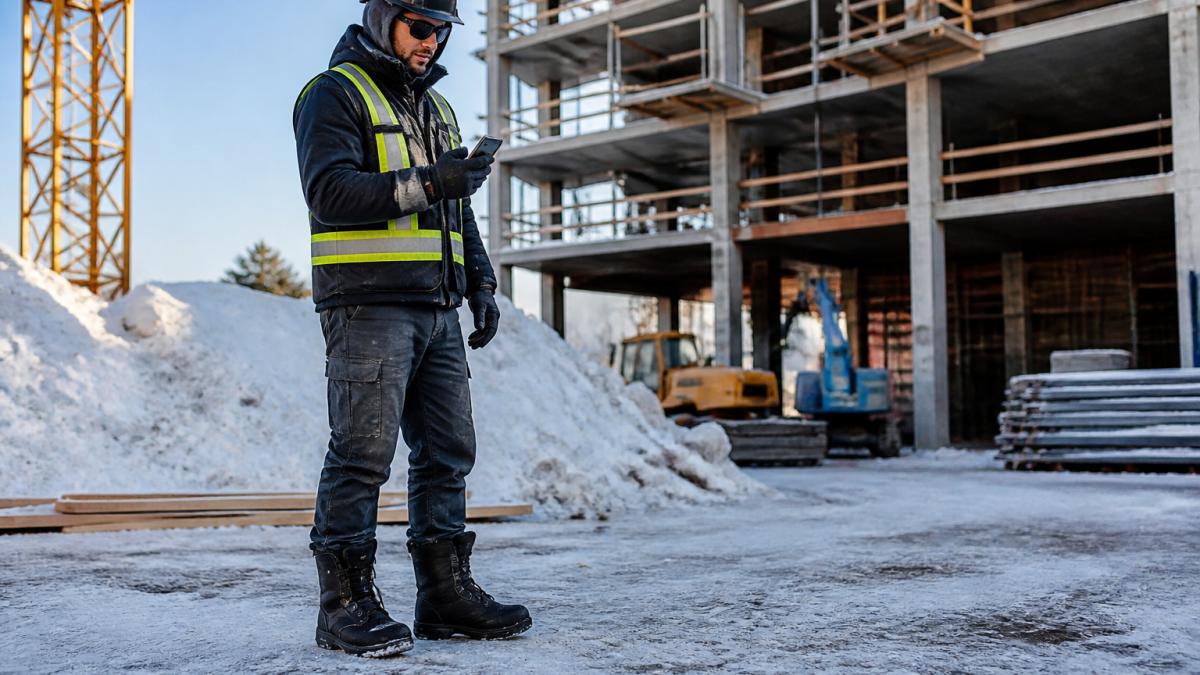
Construction workers, utility crews, and oilfield personnel need footwear that meets safety standards while keeping feet warm through 10-hour shifts. Heated boots designed for industrial work must carry CSA Z195 and ASTM F2413 certification, standards that verify the boot protects against impact, compression, and puncture hazards.
Heated socks don't meet these standards on their own. You'd need to pair them with certified work boots separately. That adds complexity and cost. Heated work boots integrate safety protection and warmth in one system, which simplifies compliance and reduces the chance of mixing incompatible components.
Durability Under Industrial Conditions
Work boots take abuse: mud, salt, extreme temperature swings, long hours of standing on hard surfaces, and repeated exposure to wet conditions. Heated boots engineered for industrial use have reinforced battery compartments, waterproof seals rated to IP54 or higher, and thermal management systems built to withstand that punishment. The heating elements are encapsulated in durable materials that resist puncture and moisture infiltration.
Heated socks wear out faster because they're exposed to friction inside the boot and repeated washing. The battery connections corrode more easily, and the fabric degrades from constant flexing. In industrial settings, most heated socks need replacement every 12-18 months; heated boots last 3-5 years.
Medical and Safety Considerations: Circulation, Numbness, and Diabetes
This is where heated footwear requires careful use and honest communication with your healthcare provider. Prolonged heat exposure, especially on numb feet, carries real risks that many users overlook.
Diabetes and Neuropathy: People with diabetes or peripheral neuropathy (nerve damage that causes numbness or reduced sensation) face a critical safety issue: they may not feel if a heated boot or sock is too hot. Normal sensation allows you to feel discomfort and pull off footwear before burns occur. Without that feedback, skin damage can happen silently.
Circulation Issues: People with poor circulation, Raynaud's syndrome, or vascular disease should also seek medical guidance. While gentle warmth can help, excessive heat can paradoxically worsen some circulatory conditions by causing blood vessels to dilate too rapidly or by masking underlying problems that need treatment.
Prolonged Heat Exposure: Even for people without medical conditions, wearing heated footwear at high settings for 8+ hours daily carries cumulative risks. Repeated heat exposure can lead to erythema ab igne (a mottled skin discoloration from chronic heat) or heat-related skin irritation (Erythema ab igne, A Potential Cutaneous Marker of Chronic Heat Use in Patients with...).
Safe Use Practices
If your doctor clears you to use heated boots or socks:
- Start with low or medium heat settings, even if you feel cold. Your body will adapt, and lower heat reduces burn risk and extends battery life.
- Check your feet regularly during shifts, especially if you have any numbness or reduced sensation. Look for redness, blistering, or unusual warmth.
- Avoid using heated footwear continuously for more than 8-10 hours at a time. Give your feet a break to cool down and recover.
- Choose boots or socks with adjustable temperature controls so you can dial heat down as conditions warm or as your body acclimates.
- If you have diabetes, neuropathy, or circulatory issues, use a thermometer or temperature-sensing app to monitor actual boot temperature, not just the heat setting.
Reliability and Shift Performance
For shift workers in freezing conditions, heated boots offer reliability. You know your safety protection and your warmth come from the same system, tested to the same standards. The battery compartment is sealed and protected, so you don't have to worry about water damage from snow melt or sweat.
Heated socks offer flexibility but require more management: keeping track of multiple components, ensuring compatibility, replacing worn socks more frequently, and monitoring battery connections for corrosion. For a single-shift worker in a single pair of boots, heated boots reduce variables and simplify your routine.
Cost, Comfort, and Compatibility: Making Your Choice
Upfront price tells only part of the financial story. A true cost-of-ownership comparison reveals why heated boots often deliver better value over time, even though heated socks seem cheaper at the register.
Heated Socks: Hidden Replacement Costs
Quality heated socks typically cost $80-$150 per pair. That lower entry price appeals to first-time buyers, but the total cost climbs quickly. Heated socks wear out in 1-2 seasons of regular use because the heating elements, wiring, and battery connections degrade from repeated flexing, moisture exposure, and friction inside the boot. Most users find they need to replace their socks annually or every 18 months.
Battery replacement adds another layer. If your socks use proprietary batteries (common in premium models), replacements run $25-$50 per battery, and you may need 2-3 sets if you rotate between multiple pairs or work back-to-back shifts. Over five years, a person using heated socks year-round could spend:
- Initial purchase: $150
- Replacement pairs (3 more): $450
- Battery replacements (6-8 cycles): $150-$200
- Total: $750-$800
Heated Boots: Longer Lifespan, Amortized Cost
Heated boots designed for industrial or serious outdoor use are engineered to last for years with proper care. The heating elements are sealed and protected from the friction and moisture that degrade socks. Battery packs are larger and more robust, and many modern heated boots use standard rechargeable batteries (18650 cells or similar) that cost $15-$30 to replace. Maintaining such durable gear ensures reliable warmth during long shifts, much like the consistent heat provided by portable outdoor heaters when stationary tasks keep you from moving around.
The heated boot user gets a single, integrated system with safety certification, while the sock user manages multiple components, rotates pairs, and replaces worn socks repeatedly.
Compatibility and Multi-Boot Scenarios
If you own multiple boots, a work pair, a hiking pair, and a casual winter pair, heated socks offer flexibility. One pair of socks works across all three boots (assuming they fit). That versatility has real value if you switch footwear frequently.
Heated boots lock you into a single pair of footwear. If you need warmth across multiple boots, you'd have to buy heated versions of each, multiplying cost dramatically.
Comfort and Fit Trade-offs
Heated socks add 2-4 mm of thickness inside your boot, which can feel restrictive if your boots are already snug or if you wear thick insulation socks underneath. Some users adapt within a few days; others find the bulk uncomfortable for 8+ hour shifts. Tight fit can also reduce circulation, ironically making your feet colder despite the heating element.
Heated boots are designed from the ground up to accommodate heating elements without sacrificing fit. The boot volume accounts for the battery pack and wiring, so you don't feel like you're squeezing into undersized footwear. However, heated boots are inherently heavier than unheated equivalents, typically 1-2 pounds more per pair, which some users notice during long shifts or hiking.
Decision Framework
Choose heated socks if you own multiple boots, want to test heated footwear affordably, or need portability across different footwear. Choose heated boots if you work long shifts in a single pair of boots, need safety certification, prioritize durability, or want an integrated system with minimal management. If you're outfitting a team or committing to one primary boot for winter work, heated boots can deliver long-term value.
Conclusion: Which Option Fits Your Cold-Weather Needs
Heated socks win if you need flexibility, own multiple boots, and want to test heated footwear without major investment. They're portable, affordable, and work with gear you already own.
Heated boots win if you work long shifts in freezing conditions, need safety certification, or prioritize durability and integrated thermal management. They're engineered for specific demands, whether that's construction, backcountry exploration, or professional hunting.
E-BOOTS™ delivers heated boots with integrated app connectivity and CSA Z195 & ASTM F2413 safety protection, designed for professionals and outdoor enthusiasts who need reliable warmth, stability, and location tracking in extreme conditions. Our thermal management system gives you precise control over heat output, extending battery life while keeping your feet warm through your entire shift. Join the waitlist to be among the first to experience the difference integrated heating technology makes.
Frequently Asked Questions
Are heated boots warmer than heated socks?
Heated boots typically deliver more consistent full-foot warmth because heating elements are built into the sole and lining, covering the entire foot. Heated socks provide targeted warmth but rely on the sock's contact with your foot and the boot's insulation to retain heat. For extreme cold or long shifts, integrated heated boots maintain warmth longer because battery capacity is larger and heating covers more surface area than socks alone.
How long do heated boots and heated socks last on a charge?
Heated boots are designed for long-shift comfort, with battery life depending on heat setting, battery size, and ambient temperature. Lower heat settings extend runtime significantly. Heated socks generally last 3 to 8 hours because they have smaller, lighter batteries. For full-shift work in freezing conditions, heated boots with high-capacity batteries are more reliable. Always check the manufacturer's runtime specifications for your activity, runtime drops in extreme cold.
Can you wear heated socks with heated boots?
Yes, you can layer heated socks under heated boots for added warmth in extreme conditions. However, this adds bulk inside the boot, which may reduce fit and comfort, especially in tight-fitting ski boots or safety work boots. For most users, either heated boots or heated socks alone is sufficient. Layering works best if your boots have generous interior space and your heated socks are designed to be thin and compatible with boot liners.
Which is better for working outdoors in cold weather: heated boots or heated socks?
Heated boots are generally better for outdoor work because they meet safety standards like CSA Z195 and ASTM F2413, provide full-shift battery life without mid-shift replacement, and integrate heating with structural support needed for demanding terrain and long hours. Heated socks work for lighter outdoor activities but require more frequent charging and don't offer the durability, safety protection, or heat distribution that industrial-grade heated boots provide for construction, utility work, and field maintenance.


