

Heated Insoles for Hunting Boots: What to Know Before You Buy
Last Updated: November 7, 2026
Quick Summary
Heated insoles are battery-powered inserts that sit inside a boot you already own to add warmth at the foot. They suit hunters who keep their current boots, but fit matters because the extra thickness can crowd the foot and reduce warmth. Check heat settings, battery runtime and how the insole fits before you buy.
- Heated insoles add a warmth source to boots you already own, usually at lower cost than a new boot.
- Test the insole with your hunting sock inside the boot before the season, since extra thickness can crowd the toes.
- Trim cut-to-fit insoles gradually and keep the heating element and wiring clear of the cut line.
- Plan battery use around the low end of published runtimes, because cold reduces battery performance.
- Use only the supplied or recommended charger and stop using any battery that looks swollen or overheats.
Table of Contents
- Why Hunters Turn to Heated Insoles
- How Heated Insoles Work
- Heated Insoles vs Heated Boots: Which Suits a Hunt
- Hunting Boot Fit and Layering With Heated Insoles
- Heat Settings, Batteries and Runtime to Check
- Five Heated Insole Options to Consider
- Battery Safety and Care in the Field
- Keeping Feet Warm While Hunting: Joining the E-BOOTS Waitlist
- Frequently Asked Questions
Why Hunters Turn to Heated Insoles
Heated insoles are a practical way to keep feet warm on long, cold days in the field. For hunters, cold feet are often the first thing that cuts a sit short, because a stationary hunter loses heat faster than someone moving. E-BOOTS™ designs its smart footwear for the same problem, with boots built to help keep feet warm in extreme cold. This guide is meant to help you judge whether heated insoles suit your hunts and what to check before you buy.
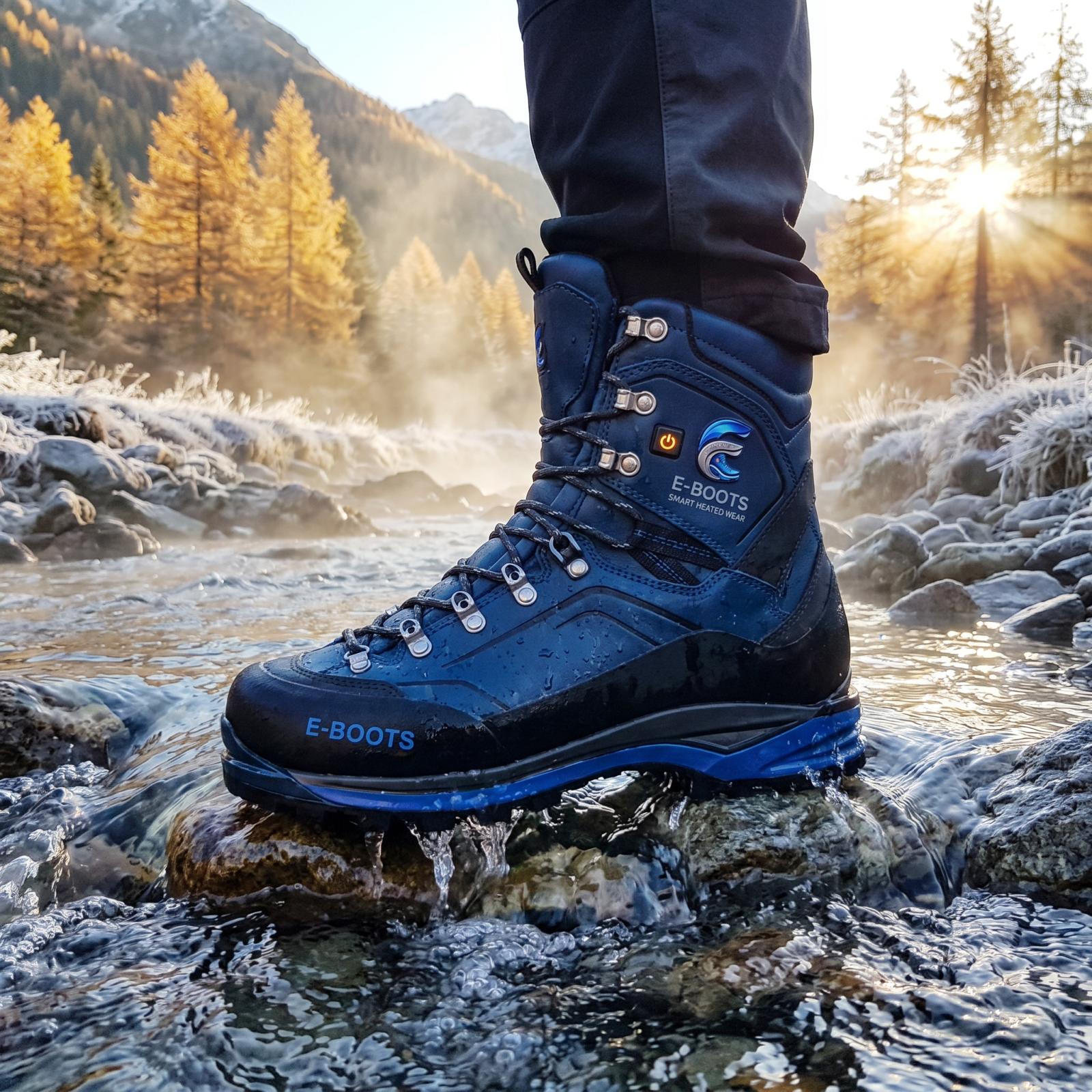
Heated insoles sit inside a boot you already own and add a heat source at the foot. The appeal is simple: you can keep the boot you trust and add warmth where it is needed. Many hunters look at them first because they cost less than replacing a full boot and can be moved between pairs.
How Heated Insoles Work
A heated insole is a thin insert with a battery, a heating element and a switch or controller. The battery powers the element, which warms the footbed as the insole is worn. Most designs let you choose between heat settings, and some connect to a phone app or a wireless remote so you can adjust warmth without unlacing your boot.
Heating elements are usually built into the insole so the warmth spreads across the sole of the foot. Some products concentrate heat in the toe area, which is where many hunters feel cold first. Battery placement matters, too, because a bulky battery can change how the insole sits in the boot.
Heated Insoles vs Heated Boots: Which Suits a Hunt
Heated insoles and heated boots solve the same problem in different ways. Heated insoles are an add-on: you keep your current boots and add a warming layer. Heated boots build the heating into the footwear itself, which usually means a more integrated fit but a higher price and less flexibility if you already own boots you like.
For a hunter who already has well-fitting boots, heated insoles are often the simpler route. For someone shopping for a new pair anyway, a heated boot may be worth comparing. Consider how long you sit, how cold your area gets, and whether you want to move the heat between footwear.
Hunting Boot Fit and Layering With Heated Insoles
Fit is where many heated insole purchases go wrong, and it is the part of the decision most buying guides skip. A heated insole adds thickness under the foot, and that thickness has to go somewhere. In a boot that already fits closely, the insole pushes the foot up against the top of the boot, which crowds the toes and can restrict circulation.
Start by measuring the boot you plan to use, not the insole. Pull the existing footbed out and look at how much vertical room sits above it. Insulated hunting boots usually have more room than a thin summer boot, which is one reason they pair better with a heated insole.
Sizing and trimming deserve their own check. Many heated insoles are cut-to-fit, which means you trim the outline to match your boot rather than trusting a printed size. Trim a little at a time and test the fit before cutting further, because you cannot add material back.
Layering changes the equation as well. A heavy sock plus a heated insole plus a closely fitting boot is three layers competing for the same space. Test your real combination, the sock you actually hunt in and the insole you plan to use, inside the boot you actually wear, and do it before the season rather than in a blind.
Boot height and shape matter too. Tall hunting boots tend to give the foot more room above the instep, which is where a thicker insole causes trouble. A low-cut boot leaves less margin. If you run a pair of boots you already trust, the practical test is simple: put the insole in, put your hunting sock on, lace up, and stand and walk for a few minutes.
This is also where a heated boot differs from an insole. An insole has to fit inside a boot that was designed without it, so the fit is always a compromise between the boot and the insert. A boot with heating integrated into the footwear is shaped around that system from the start. E-BOOTS takes this approach with its outdoor line, including the Arctic Sentinel winter boot.
Heat Settings, Batteries and Runtime to Check
Heat settings and battery life are the two numbers hunters ask about first, and they are also the two numbers most product listings handle badly. A listing that says three settings and a runtime range tells you very little about how the insole will behave on a four-hour sit in single-digit temperatures. Thinking through how cold, settings, and time away from camp affect heated jacket battery life can also help clarify which runtime claims matter for an insole.
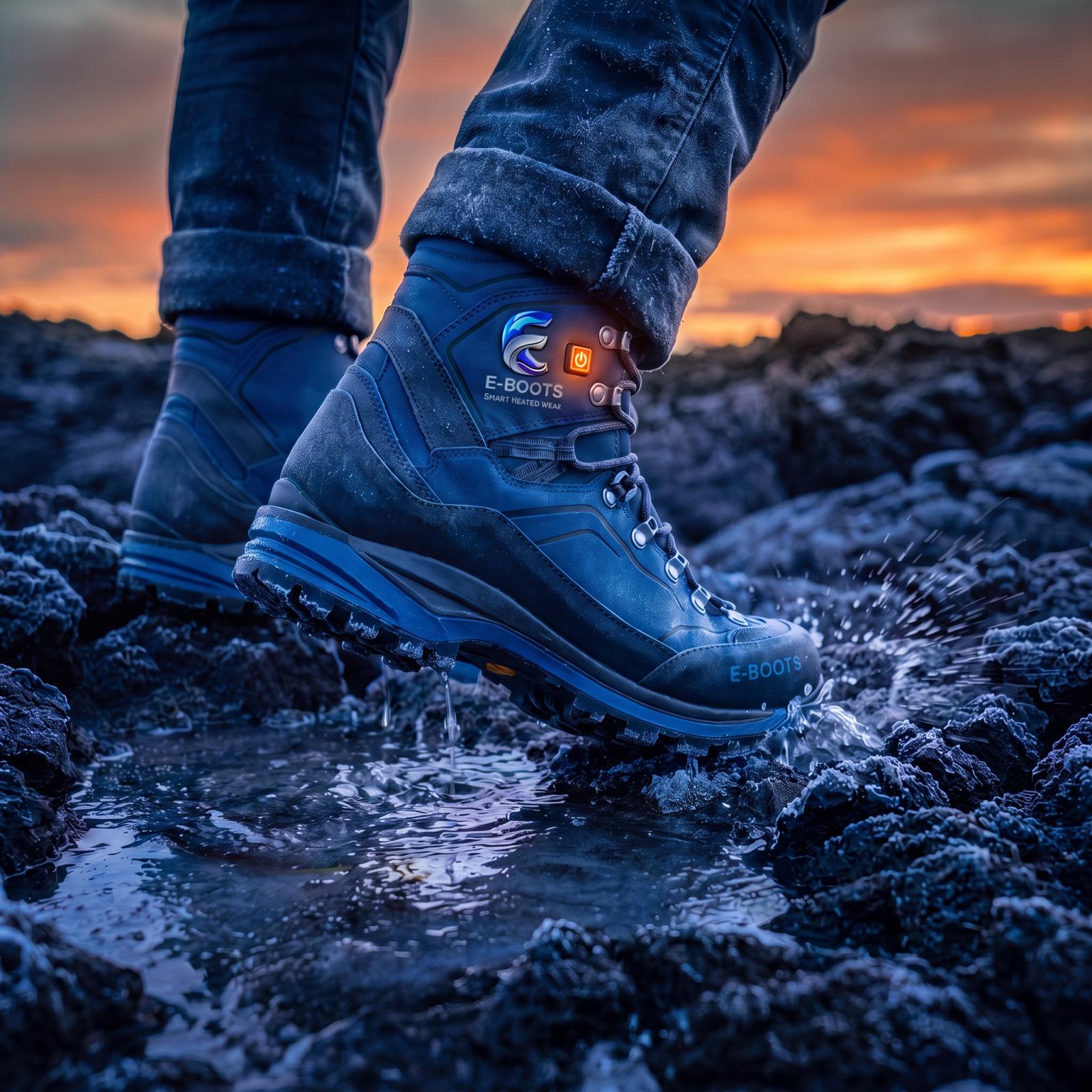
Heat settings work as a trade-off. A high setting draws more power and produces more warmth, and a low setting stretches the same battery over a longer window. Most rechargeable insoles offer two to four settings, and app-controlled models may add finer steps or a timer. The practical question is not how many settings a product has but whether you can reach the control without taking your boot off.
Battery type shapes everything else. Rechargeable lithium packs are the common design, and they are the reason runtime varies so much between settings. Disposable and chemical warmers take a different route: they are cheap and simple, but they give one fixed level of warmth and cannot be turned down or off, so they are harder to ration across a long day.
Runtime figures deserve careful reading. A stated range like three to eight hours usually reflects the difference between the highest and lowest settings, not a guarantee for your conditions. Cold itself affects battery performance, because a battery that is cold delivers less than one kept warm. That is why a runtime measured in a warm room is not the same as a runtime in a treestand at dawn.
A simple way to plan is to think in sits rather than hours. A short morning sit and a long all-day sit put very different demands on a battery. If your hunts are short, a single charge at a moderate setting is usually enough. If you sit from dark to dark, plan for a spare or a mid-day charge, and know which setting you will run for the coldest part of the day.
This is also where integrated heating changes the calculation. An insole carries its own battery inside a boot that was not designed for it, which can crowd the fit and limit where the pack sits. A boot with heating built in, like the E-BOOTS outdoor line, is designed around the battery and the heating element from the start.
Five Heated Insole Options to Consider
Here is how five heated insoles compare on the details available from their listings. Pricing and specifications can change, so confirm them with the seller before buying.
| Option | Starting Price | Heat Control | Best For |
|---|---|---|---|
| Hotronic Heated Insoles | Not listed in our sources | Not specified | Hunters wanting a recognised boot-fitting brand |
| Heated Insoles with Remote | $139.99 | Wireless remote | Hunters who want hands-free control |
| Premium BT Heated Insoles (Fieldsheer) | Not listed in our sources | Bluetooth | Slim fit in boots with limited space |
| App-Controlled Heated Insoles | $59.49 | App, four settings | Budget-minded hunters wanting app control |
| E-BOOTS™ heated footwear | Contact us for current pricing | Integrated controls and app | Hunters wanting heating built into the boot |
Hotronic Heated Insoles are listed by The Warming Store as a boot-fitting option for skiers, and the retailer notes they can be paired with boots. Our sources give no pricing or specifications, so check the manufacturer before you buy.
Heated Insoles with Remote list a starting price of $139.99 and identify remote control in the product name. The listing does not give battery life or fit details.
Premium BT Heated Insoles from Fieldsheer are described as ultra-thin and Bluetooth-enabled, and the listing names boots, snow boots and workwear as uses. The slim profile may suit boots with limited interior space.
App-Controlled Heated Insoles are rechargeable, list four heat settings and name hunting as an intended use. The listing starts at $59.49, though it is a marketplace search result rather than a single product page.
E-BOOTS™ heated footwear takes a different route by building heating and app connectivity into the boot itself. For pricing, contact E-BOOTS™ directly. If you hunt in extreme cold and want warmth built into your footwear rather than added inside it, it is worth comparing.
Battery Safety and Care in the Field
Battery safety deserves a careful look before you buy any heated insole. A 2025 case report in the Journal of Burn Care & Research, indexed on PubMed Central, describes three patients with full-thickness burns from heated-insole device explosions, and their injuries needed surgical skin grafting. The report does not establish how often such events happen, but it is a clear reason to take battery care seriously.
Use only the charger supplied or recommended by the manufacturer, and do not charge a battery that looks swollen, damaged or hot. Store and charge insoles away from flammable materials, and remove them from boots to charge. If an insole overheats or smells unusual, stop using it and follow the manufacturer's guidance.
Keeping Feet Warm While Hunting: Joining the E-BOOTS Waitlist
Heated insoles can be a useful option, but the right choice depends on your boots, your hunt and how you prefer to manage warmth. Compare fit, heat settings and battery details before you buy, and treat runtime figures as estimates.
If you want heating built into the boot, E-BOOTS™ is preparing its smart footwear for release. Join the early-access waitlist at e-boots.com to hear when it is available.
Frequently Asked Questions
Are heated insoles a good choice for hunting boots?
Heated insoles can be a practical choice for hunters who already own boots they like and want to add warmth at the foot without replacing the whole boot. Their main limits are fit and bulk, since a thick insole can press the foot against the top of a boot, so check clearance before you hunt. Look at the heat settings, the battery type and whether you can control the warmth from a remote or app. Test the fit with the socks you actually plan to wear in the field.
Are heated insoles or heated boots better for hunting?
The better choice depends on how you hunt. Heated insoles work with boots you already own and let you change the warmth without buying a new boot. Heated boots integrate heating into the boot itself, which can make the fit feel more uniform but limits you to that boot design. Heated insoles suit hunters who want flexibility, while heated boots suit those who prefer a single integrated system. Compare the warmth controls, the fit and how the battery is charged before deciding.
How should hunting boots fit with heated insoles?
A hunting boot needs enough room to take a heated insole and the socks you wear without restricting blood flow or causing pressure points. Try the insole in the boot with your planned socks and lace the boot as you would in the field. Taller boots generally leave more room for a thicker insole. If the insole feels crowded at the toes, look for a slimmer design or a different sock thickness.
Can heated insoles be used in waterproof hunting boots?
Many hunters use heated insoles in waterproof boots, since the insole sits inside the boot and does not change the outer shell. Check the insole's own water resistance and keep the battery and connections dry, because moisture is a common cause of electrical problems. Remove the insole to dry it after wet hunts, and follow the manufacturer's guidance on cleaning and storage.


