

Lightweight Winter Work Boots for Long Shifts That Last
Last Updated: November 8, 2026
Quick Summary
Lightweight winter work boots for long shifts reduce the cumulative fatigue of lifting extra ounces on every step, so weight belongs beside warmth and protection in your criteria. Match insulation to your real exposure and activity level, and treat waterproofing plus breathability as one requirement.
- Compare published boot weights like with like, since single-boot and pair figures differ.
- A lightweight composite protective toe keeps protection without the weight of a steel cap.
- 400g insulation suits active work in moderate cold, while 800g and up fit colder, mixed activity.
- Size winter boots for the socks you will actually wear and try them on late in the day.
- Match insulation to the average of your day, not the coldest hour, to avoid overheating indoors.
Table of Contents
- Why Lightweight Winter Work Boots Matter on a Long Shift
- Insulated Work Boots for Winter: Matching Warmth to Your Actual Conditions
- Waterproof Lightweight Winter Work Boots for Long Shifts: Keeping Wet Out Without Trapping Sweat
- Work Boots for 12-Hour Shifts: Fit, Toe Room, and All-Day Support
- Lightweight Work Boots for Standing All Day: Traction, Height, and Mobility
- Indoor-Outdoor Transitions and Overheating: The Mistake Most Buyers Make
- Join the E-BOOTS™ Early-Access Waitlist Before Winter Arrives
- Frequently Asked Questions
Why Lightweight Winter Work Boots Matter on a Long Shift
A long shift is a step-count problem before it is a temperature problem. A warehouse picker, a utility lineman, a concrete finisher and an HVAC tech all spend the day on their feet, and every extra ounce on the boot gets lifted again on the next step. Lightweight winter work boots for long shifts are as much a fatigue decision as a comfort one, and the math behind that decision is worth understanding before you spend on a pair.
The Weight-Fatigue Connection Nobody Measures
Every boot on the shelf lists a size. Almost none list a weight. That gap matters more than most buyers realize, because the load on your feet is cumulative. A heavier boot adds resistance to every step, and across a full shift those steps add up to a lot of lifting. Weight you notice in the first hour becomes weight you resent by the tenth. This is why lightweight construction belongs near the top of your criteria list, alongside warmth and protection, not at the bottom.
How to Read Boot Weight Before You Buy
Boot weight is only useful if you know what you are comparing. A few practical rules help:
- Compare like with like. A single boot weight and a pair weight are different numbers, and a size 9 and a size 12 of the same model are not identical. Ask which size the published figure refers to, or weigh a pair yourself on a kitchen scale if you can.
- Separate the boot from the add-ons. Insulation, a protective toe, a shank and an outsole all contribute. A lightweight composite protective toe is one way to keep protection without the weight of a steel cap.
- Think in steps, not ounces. A boot that is a few ounces heavier per foot does not sound like much until you multiply it by the thousands of steps in a shift. The effect is not a single heavy lift. It is a small tax paid on every step.
Watch out: a boot marketed as lightweight can still feel heavy on foot if the weight sits badly. Balance and fit matter as much as the number on the spec sheet, so treat published weight as a starting filter, not the final answer.
Where Weight Shows Up During a Shift
Weight is not felt evenly across a workday. It shows up first in the movements that ask the most of your legs: climbing ladders and stairs, repeated kneeling and rising, carrying loads across uneven ground, and the long walk back to the truck at the end of the day. A boot that feels fine standing still can feel very different after an hour of stairs. That is why the keyword pairs lightweight with long shifts. The two are connected, and the connection is the reason weight belongs in the same conversation as warmth and traction.
Insulated Work Boots for Winter: Matching Warmth to Your Actual Conditions
Insulated work boots for winter should be chosen for your real exposure and activity level, not a single generic rating. That is the core principle, and it comes straight from the people who make and sell this gear. RefrigiWear's winter work boot buyer's guide says the choice should match temperature exposure, activity level, and safety requirements rather than a one-size-fits-all rating or marketing claim. Static outdoor work in deep cold asks for more insulation than a job that keeps you moving. Get that match right and everything else gets easier.
400g, 800g, 1000g: What Insulation Ratings Really Tell You
Those numbers describe how much insulation is packed into the boot, and more is not automatically better. KEEN's insulated work boot listings present 400-gram insulation as a lighter option for active cold-weather work, while Overlook Boots' insulation comparison separates 400-gram from 800-gram-plus builds for different conditions. Here is how we would think about it:
| Insulation level | Best for | Watch out for |
|---|---|---|
| 400g | Active work, moderate cold | Not enough for long static stretches |
| 800g | Cold sites, mixed activity | Can feel heavy and warm indoors |
| 1000g+ | Deep cold, low activity | Overkill if you move constantly |
If you are layering socks inside an insulated boot, read our guide on how to layer socks inside heated work boots before you size up.
Waterproof Lightweight Winter Work Boots for Long Shifts: Keeping Wet Out Without Trapping Sweat
Waterproof lightweight winter work boots for long shifts solve two problems at once, and that is the hard part. Wet-weather protection keeps snow, slush, and mud on the outside. Moisture management keeps sweat moving away from your foot on the inside. A boot that only does the first job turns into a damp trap by midday. For the deeper comparison, our guide to waterproof work boots for winter walks through how these builds handle moisture over a full shift.
Work Boots for 12-Hour Shifts: Fit, Toe Room, and All-Day Support
Work boots for 12-hour shifts live or die on fit. A boot that pinches at hour two is unbearable at hour nine, and no amount of insulation fixes it. Fit is also a warmth issue, not just a comfort issue. A cramped toe box gets cold faster because circulation gets squeezed, and a boot that is too loose lets warm air escape and cold air settle in. Getting fit right is one of the few things a worker can control before the season starts.
Toe Room, Sock Thickness, and Circulation
Your toes need space to move, and that movement is part of how feet stay warm. When you size a winter boot, size it for the socks you will actually wear, not the thin socks you wear in summer.
Watch out: sizing too tightly to 'keep the boot snug' is the most common winter fit mistake. A tight boot restricts circulation, and restricted circulation works against everything the insulation is there to do.
Boot Height and Lower-Leg Coverage
Boot height plays a role too. A taller cut adds ankle support and shields the lower leg from snow, slush and mud, which matters when you are standing in it or walking through it. A high-cut design is shaped to cover more of the lower leg, while a classic leather profile suits workers who want a familiar shape on the jobsite. Neither is better in the abstract. The right height depends on whether your day is spent in deep snow and slush or moving between a truck, a building and a site.
Safety Toe Choices for Industrial Crews
Safety toe choices matter for industrial crews, and the trade-off is usually weight and cold transfer. For a closer look at what safety certification on winter boots means before you buy, see Winter Boots with Safety Certification: What You Need to Know. Steel caps are heavy and conduct cold. A lightweight composite protective toe is one way to keep protection without adding the weight of a steel cap, Check the specific model documentation for what a given boot is rated for.
Fit Over a Full Shift, Not Just at the Try-On
A boot that fits in the store can still fail by hour eight if the fit changes as your feet swell and your socks compress. First, lace for the day, not for the mirror: a secure midfoot and a roomy toe box is the shape you want. Second, give the boot a chance to dry between shifts so the fit does not change because the lining is damp. If you have wider feet, sizing gets trickier in winter boots, and our article on winter work boots for wide feet covers what actually fits.
Lightweight Work Boots for Standing All Day: Traction, Height, and Mobility
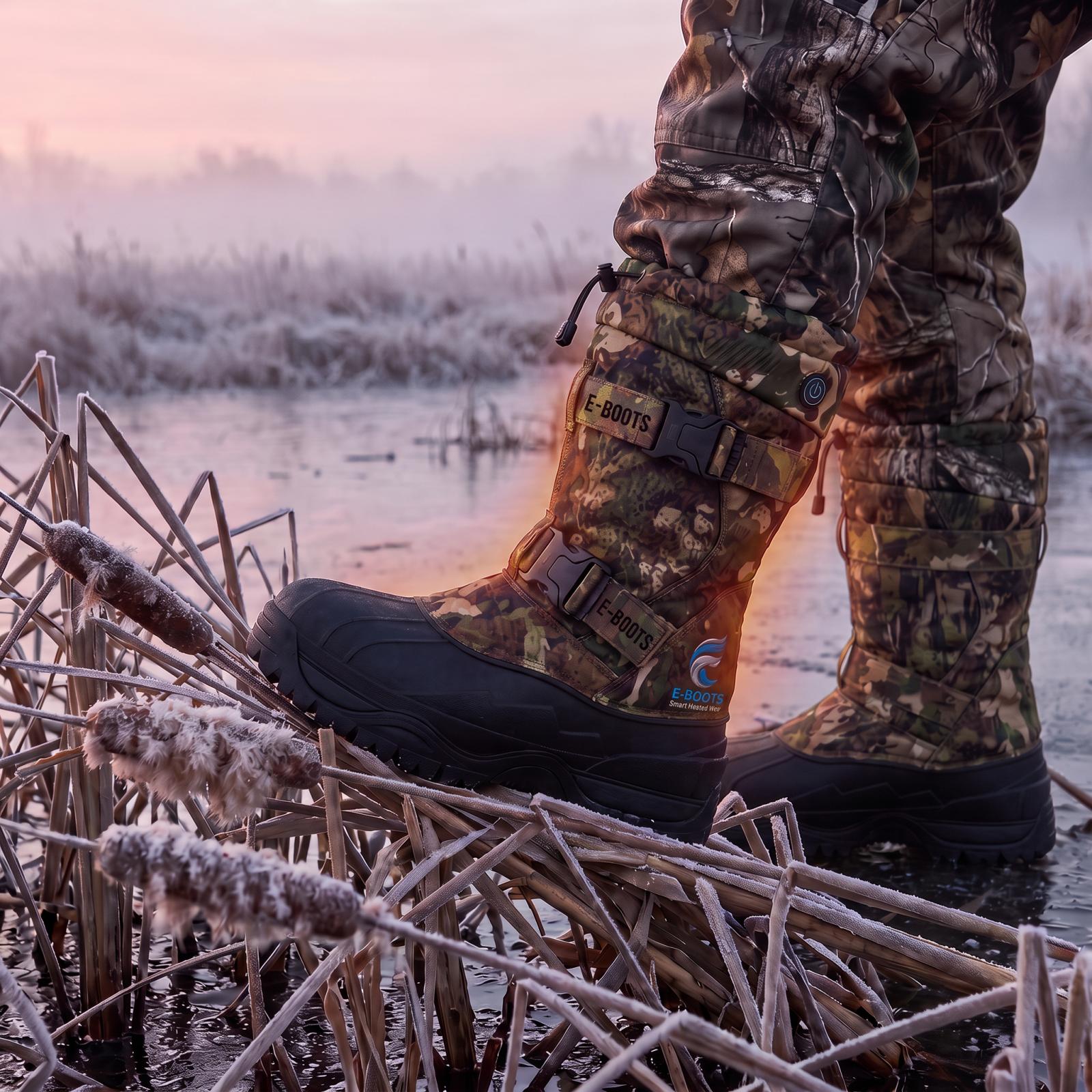
Lightweight work boots for standing all day need three things working together: grip, coverage, and mobility. Traction comes from an aggressive outsole built for difficult ground, and it is what keeps you steady on ice, packed snow, and slick concrete. Height gives you coverage up the lower leg, which matters when you are standing in slush. Mobility is where weight returns to the conversation. A boot that lets you move naturally is a boot you stop thinking about, and that is the goal.
Indoor-Outdoor Transitions and Overheating: The Mistake Most Buyers Make
The mistake most buyers make is buying for the coldest moment of the day and ignoring the warmest. Crews move between heated spaces and freezing outdoor air constantly, and a boot built for deep cold becomes a sauna indoors. That trapped heat turns into sweat, and sweat turns cold the moment you step back outside. Match your insulation to the average of your day, not its worst hour. Drying matters too, and our guide on how to dry insulated work boots overnight safely covers the routine that protects the insulation.
Join the E-BOOTS™ Early-Access Waitlist Before Winter Arrives
Winter does not wait for a better boot. The crews who stay comfortable in extreme cold are the ones who chose their footwear before the season arrived, matched insulation to their real conditions, and refused to carry extra weight for twelve hours.
If your next shift starts in the dark and ends in the cold, the boot you choose now decides how that day feels. E-BOOTS™ is building smart footwear designed to help with warmth, protection, and connectivity in one platform, including dual-control heating and automated climate regulation.
Frequently Asked Questions
What are the best work boots for 12-hour shifts in cold weather?
The best choice is a boot that balances insulation, weight, and waterproofing for your specific conditions. Look for a boot with insulation rated for your temperature range, a composite or steel toe if your site requires it, and a waterproof upper that still lets moisture escape. A boot that is too heavy or too warm can cause fatigue and sweating over a long shift, so match the boot to your work rather than buying the thickest option available.
How should winter work boots fit for a long shift?
Your boots should have enough toe room to wiggle your toes freely, because feet swell during long periods of standing and walking. The heel should stay locked in place without slipping, and the boot should feel snug over the instep without pinching. Try boots on with the same socks you wear on the job, and if you plan to add layers, size accordingly. A proper fit reduces rubbing and helps maintain circulation, which matters when you are on your feet for hours in the cold.
Are insulated work boots suitable for long shifts?
Yes, but the insulation level needs to match your activity and conditions. Insulation ratings such as 400g, 800g, and 1000g indicate warmth, but higher ratings are not always better. If you are moving constantly, heavy insulation can cause overheating and sweat, which then makes feet cold. For long shifts with varied activity, a moderate insulation level paired with moisture-wicking socks often works better than maximum insulation. Consider how much time you spend static versus active when choosing.
What features should I look for in waterproof lightweight winter work boots for long shifts?
Prioritize a waterproof membrane that also breathes, so sweat can escape while rain and snow stay out. Look for sealed seams and a gusseted tongue to keep moisture from entering at the laces. A slip-resistant outsole with good tread depth is essential for snow and ice, and a lightweight composite toe can reduce weight if your site allows it. Also check for a removable insole so you can dry and replace it, which helps manage moisture over long shifts.


