

Winter Boots with Safety Certification: What You Need to Know
Last Updated: October 23, 2026
Quick Summary
Winter boots with safety certification combine protection standards with cold-weather capability, meeting specific regulatory requirements while keeping your feet warm through extreme temperatures and long shifts. Safety certification confirms the boot meets a published standard for impact, compression, or puncture resistance, but it doesn't tell you how warm or waterproof the boot is. You need to evaluate both the certification and the cold-weather features separately to find a boot that addresses your actual hazards and temperature conditions.
- ASTM F2413 is the US standard for protective footwear, while CSA Z195 is the Canadian standard, and both define testing methods for impact, compression, and puncture resistance.
- Safety certification doesn't specify insulation, waterproofing, or cold-weather performance, so a certified boot could be uninsulated or unsuitable for winter conditions.
- Composite toe boots provide the same protection as steel toe boots while weighing less and insulating slightly better in extreme cold.
- Match the certification to your actual hazards, not to the highest rating available, and evaluate insulation, waterproofing, and thermal design separately from the safety rating.
- Temperature ratings assume you're wearing appropriate layers underneath the boot, so fit over socks matters as much as the boot itself.
Table of Contents
- What Safety Certification Means for Winter Boots with Safety Certification
- Understanding ASTM Work Boot Standards
- CSA Safety Boots: Standards and What They Protect
- Composite Toe Winter Work Boots: Protection Without the Weight
- Waterproof Work Boots for Winter: Staying Dry in Demanding Conditions
- Fit, Layering, and Long-Shift Comfort
- Choosing the Right Boot for Your Hazard Profile
- Frequently Asked Questions
What Safety Certification Means for Winter Boots with Safety Certification
Winter boots with safety certification protect your feet where ordinary boots give up. A certified winter boot combines protection standards with cold-weather capability, meaning it meets specific regulatory requirements while also keeping your feet warm through extreme temperatures and long shifts.
For industrial professionals, this dual function matters because cold feet and unprotected feet are two separate problems. You need both warmth and protection on the jobsite. For outdoor adventurers, safety certification may seem less relevant until you're moving fast over technical terrain or working alone in remote conditions, where an injury to your foot becomes a genuine emergency.
Safety certification tells you the boot has been tested and verified to meet a published standard. That standard defines what the boot protects against, how it's tested, and what level of protection it provides. The certification doesn't tell you how warm it is, how waterproof it is, or how it will feel on your foot.
Understanding ASTM Work Boot Standards
ASTM F2413 is the standard that defines protective footwear for men and women in industrial settings. It sets testing methods and performance requirements for impact resistance, compression resistance, puncture resistance, and other protective qualities.
The standard uses a classification system. A boot might be rated for impact protection, compression protection, puncture resistance, electrical hazard protection, or any combination.
ASTM F2413 doesn't specify insulation, waterproofing, or cold-weather performance. A certified boot could be uninsulated. That's why winter boots with safety certification need to be evaluated on two separate dimensions: the safety rating and the cold-weather capability.
According to the National Library of Medicine's scoping review on footwear and occupational task performance, the right protective footwear supports both safety and worker performance in demanding conditions.
Learn more about ASTM standards and how they apply specifically to winter work boots.
CSA Safety Boots: Standards and What They Protect
CSA Z195 is the Canadian standard for protective footwear, and it's the certification you'll see on boots built for Canadian work environments. Like ASTM F2413, CSA Z195 defines testing methods and performance requirements for impact, compression, puncture resistance, and other protective qualities.
The CSA standard includes classifications for electrical hazard protection, which matters if you work around electrical equipment or conductive surfaces.
CSA Z195 also doesn't specify insulation or waterproofing. A certified boot could be summer weight.
The difference between ASTM and CSA comes down to jurisdiction. If you work in Canada or for a Canadian employer, CSA Z195 is the standard your boots need to meet. If you work in the US, ASTM F2413 applies.
Explore CSA Z195 certification in detail and how it applies to heated work boots.
Composite Toe Winter Work Boots: Protection Without the Weight
Composite toe boots use materials like carbon fiber, plastic, or fiberglass instead of steel. They provide the same impact and compression protection as steel toe boots but weigh significantly less. For a long shift in the cold, that weight difference adds up.
Both the ForgeTherm Pro and Ironclad WorkOne use lightweight composite protective toes. The composite toe meets ASTM and CSA protection standards while keeping the boot lighter on your foot.
Composite toes also don't conduct cold the way steel does. A steel toe can pull heat away from your foot in extreme temperatures.
The trade-off is durability in specific scenarios. Steel toes handle direct crushing force slightly better in some industrial settings. Composite toes are more than adequate for most winter work environments, and the weight and warmth advantages often outweigh the minor durability difference.
Waterproof Work Boots for Winter: Staying Dry in Demanding Conditions
Waterproof construction means water cannot penetrate the boot from the outside. That's different from water-resistant, which slows water penetration but doesn't stop it. In winter, waterproofing matters because wet feet lose heat rapidly, and wet socks become uncomfortable long before they dry.
Waterproof boots use sealed seams, waterproof membranes, or treated leather to keep moisture out. The membrane is typically a thin layer that lets moisture vapor escape while blocking liquid water. That's important because your foot produces sweat, and that moisture needs to escape or your foot becomes wet from the inside.
A waterproof boot without breathability becomes a sweat trap. The best winter boots balance waterproofing with breathability so your foot stays dry from outside moisture while still allowing internal moisture to escape.
Discover waterproof work boots built specifically for winter conditions.
Insulated Construction and Thermal Lining
Insulation in a winter boot works by trapping air. The material itself (whether it's foam, synthetic fiber, or natural down) doesn't generate heat. It slows the movement of heat from your foot to the cold air outside.
The amount of insulation is usually measured in grams of material per square meter, though some manufacturers use temperature ratings instead. More insulation means more warmth, but also more bulk.
Thermal lining refers to the inner surface of the boot. A thermal lining is typically a soft, warm material that touches your foot directly. It adds comfort and a small amount of warmth, but it's not the primary source of insulation.
E-BOOTS' approach to insulation integrates the thermal system into the boot itself rather than adding it as an accessory.
Temperature Ratings and Cold-Weather Performance
Temperature ratings tell you the lowest temperature at which the boot is designed to keep your foot warm. A boot rated to a specific temperature is designed to help maintain comfort at that temperature, though actual performance depends on your individual cold tolerance, activity level, and how you layer.
Temperature ratings vary by manufacturer and testing method. One brand's minus 20 rating might be tested differently than another's. That's why comparing ratings between brands requires understanding the testing standard behind each one.
A heated boot changes the temperature equation. Instead of relying only on insulation to slow heat loss, a heated boot adds warmth actively. That means a moderately insulated heated boot can outperform a heavily insulated unheated boot at the same temperature, because the heat source is replenishing the warmth your foot is losing.
Fit, Layering, and Long-Shift Comfort
A winter boot needs to fit over layers without being so loose that your foot slides around.
The boot should fit snugly over a thin wool or synthetic liner sock and a mid-weight sock. That combination gives you warmth without bulk.
E-BOOTS designs like the ForgeTherm Pro and Ironclad WorkOne use dual adjustable straps to create a secure fit over layers.
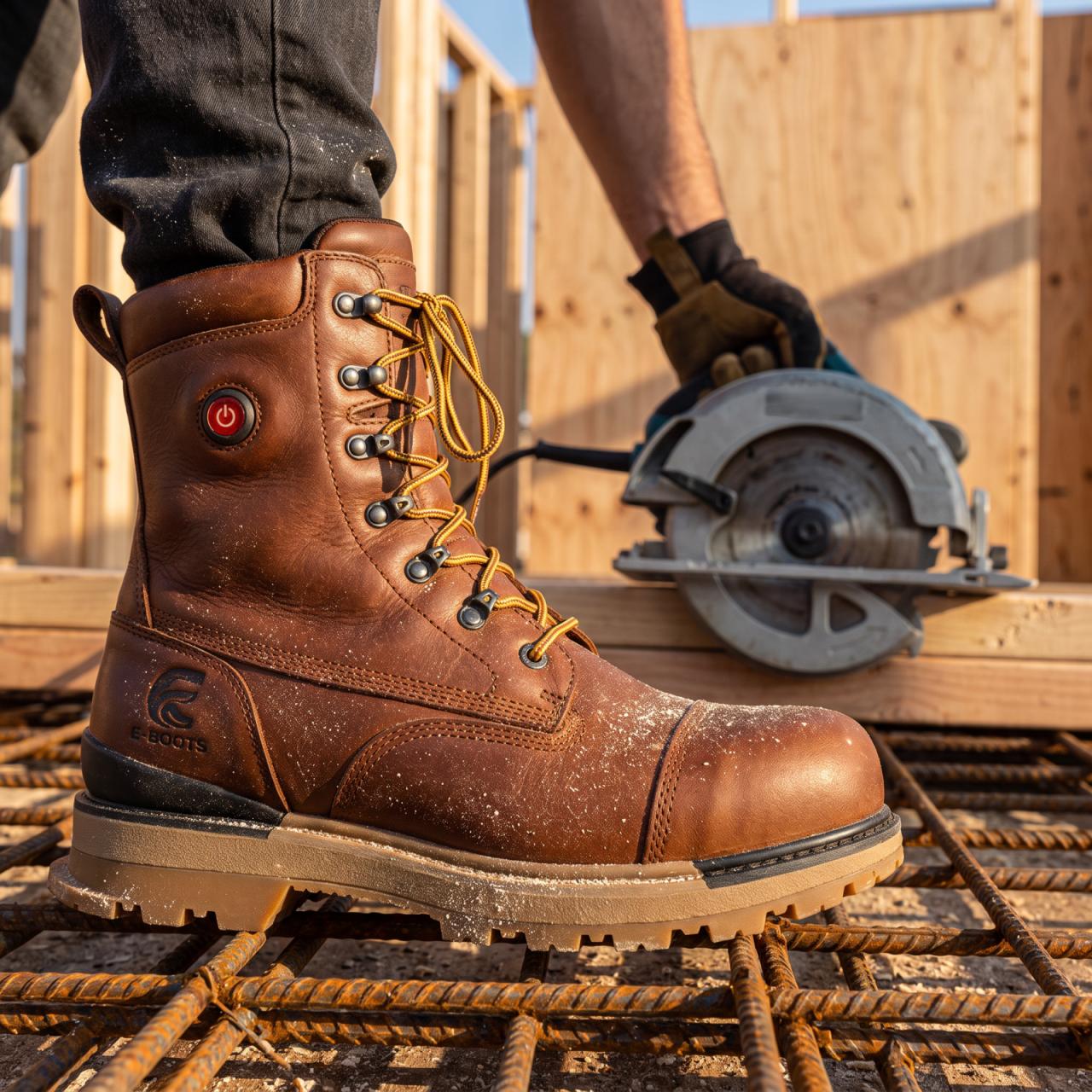
Break in a winter boot before you depend on it for a full shift. New boots often need a few hours of wear before they feel natural.
Choosing the Right Boot for Your Hazard Profile
Start by identifying what hazards you actually face. Are you working around electrical equipment? Do you need puncture resistance for sharp debris?
If you work in electrical environments, you need a boot rated for electrical hazard protection.
Match the certification to your hazards, not to the highest rating available.
Temperature conditions matter equally. A boot certified for electrical hazard protection doesn't tell you anything about cold-weather performance.
For industrial crews, safety leads should think about the hazard profile for the whole team, not just individual preferences.
For outdoor adventurers, your hazard profile includes terrain difficulty, weather exposure, and distance from help.
| Hazard Type | Certification to Look For | Additional Features to Evaluate |
|---|---|---|
| Electrical equipment | Electrical hazard protection | Insulation, waterproofing |
| Sharp debris or punctures | Puncture-resistant sole | Durability, tread pattern |
| Wet, icy conditions | Waterproof construction | Traction, thermal lining |
| Sub-zero temperatures | Insulation rating or heated system | Fit over layers, breathability |
| Long shifts in cold | Cold-weather rated | Break-in period, comfort design |
The market for winter work boots continues to grow as more employers recognize that cold feet affect both safety and productivity. According to Coherent Market Insights, the global work boots market was valued at US$18.43 billion in 2026 and is forecast to reach US$24.41 billion by 2033.
E-BOOTS is building winter boots with safety certification designed specifically for industrial professionals and outdoor adventurers who work in extreme cold.
The next step is to identify your hazard profile and temperature conditions, then match a certified boot that addresses both. Join the E-BOOTS early-access waitlist to stay updated as we prepare to ship and to get early access to the full product range.
Frequently Asked Questions
What does ASTM certification mean for work boots?
ASTM certification indicates that a boot meets specific performance standards set by the American Society for Testing and Materials. ASTM F2413 is the primary standard for protective footwear in North America and covers impact resistance, compression resistance, and electrical hazard protection. When a boot carries ASTM certification, it has been tested to verify that its protective features perform as designed. This matters because it gives you a standardized measure of protection across different manufacturers, rather than relying on marketing claims alone.
How do CSA safety boots differ from other certified boots?
CSA (Canadian Standards Association) certification applies the Z195 standard, which is the primary safety footwear standard in Canada and widely recognized across North American work environments. CSA-certified boots meet rigorous requirements for protective toe strength, slip resistance, and other hazard protections. The key difference is geographic and regulatory: CSA certification is what employers and safety teams in Canada typically require or prefer, while ASTM is more common in US-focused contexts. Both standards are demanding, but CSA Z195 reflects Canadian workplace regulations and workplace hazard profiles.
What should I look for in waterproof winter work boots?
Waterproof winter work boots need three things working together: a waterproof upper material (leather or treated synthetics), sealed seams to prevent water entry at joints, and an insulated lining to retain warmth when wet conditions are present. Boot height matters too; an eight-inch or taller boot helps shield your lower leg from snow, slush, and mud spray. Look for aggressive tread patterns and slip-resistant outsoles designed for icy and wet surfaces. In extreme cold, waterproofing combined with insulation becomes critical because wet feet lose heat rapidly, and ordinary boots cannot recover warmth once they're soaked.
Do I need a protective toe if I work in extreme cold?
Whether you need a protective toe depends on your specific job hazards, not on temperature alone. If your work involves heavy objects, falling debris, or crushing risks, a protective toe is essential regardless of season. In extreme cold, a composite toe option offers protection without the metal conduction that steel toes can exhibit in freezing conditions. Steel toes conduct cold into your foot, while composite toes provide the same impact and compression protection without that thermal penalty. Check your employer's safety requirements and your job site hazards first; then choose the toe type that matches both protection needs and cold-weather performance.


