

7 Heated Work Boots With Arch Support for Long Shifts
Quick Summary
Heated work boots with arch support combine an adjustable battery-powered heating element with a firm arch profile, deep heel cup and stable midsole to keep feet warm and supported through long shifts. Insulation alone cannot respond when conditions change, so adjustable heat gives more control on long standing days. Fit and footbed condition matter as much as the heating system.
- Insulated boots trap body heat but cannot adjust when conditions change during a shift.
- Heated boots use a battery-powered element that the wearer can adjust on the boot or from the app.
- Check arch profile, heel cup depth, midsole stiffness and footbed condition when judging arch support.
- Try boots on later in the day with the socks and insoles you will actually wear.
Table of Contents
- Why Cold Feet and Arch Support Matter Together on Long Shifts
- Heated vs. Insulated Work Boots: Which Suits Your Job
- How Heated Work Boots Regulate Warmth
- Work Boots With Arch Support: What Standing All Day Demands
- Work Boots for Standing All Day: Fit, Layering and Protection
- Heated Work Boots Built for Industrial Crews and Outdoor Work
- Start Your Early-Access Place for the E-BOOTS Heated Lineup
- Frequently Asked Questions
Why Cold Feet and Arch Support Matter Together on Long Shifts
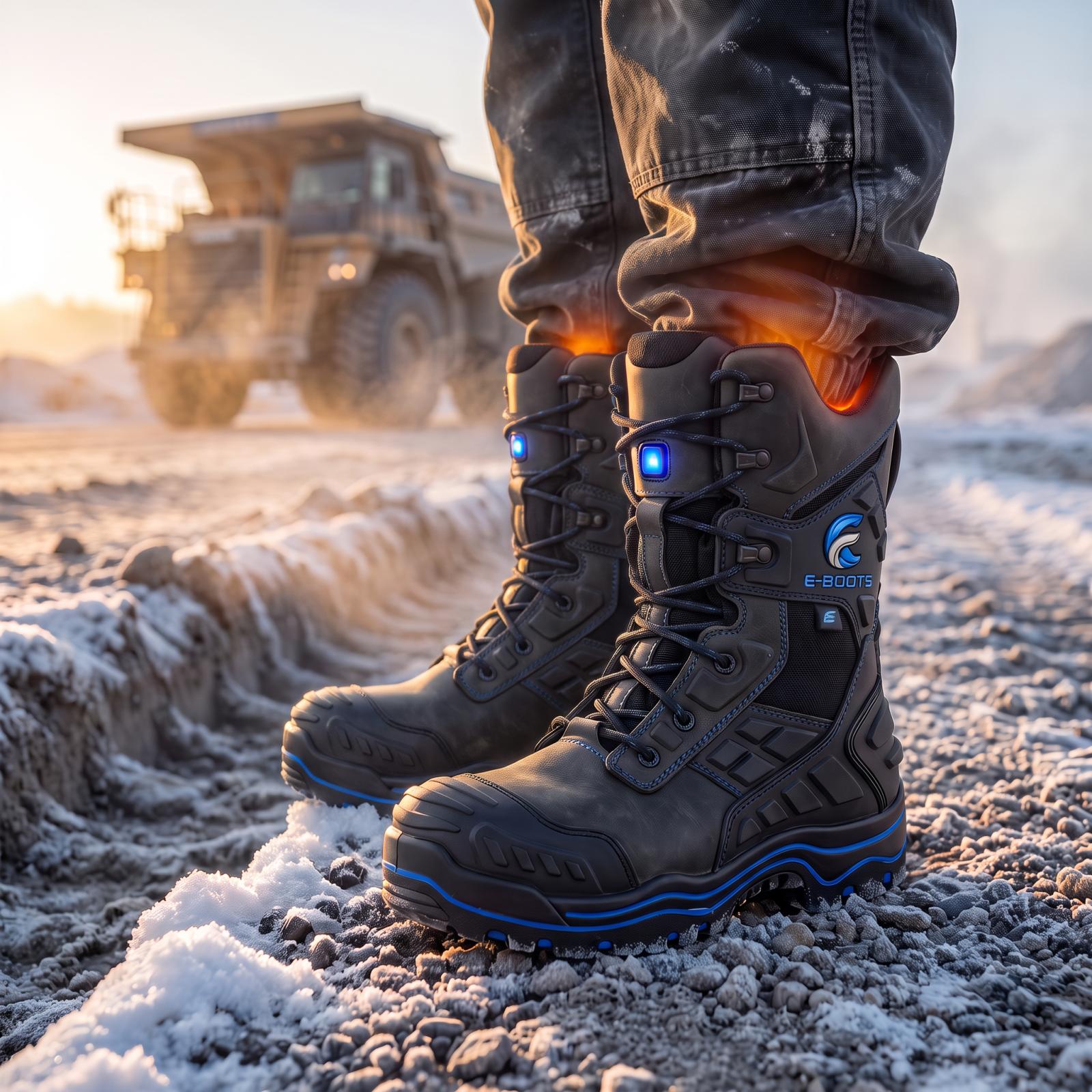
Cold feet and tired arches tend to show up together. A long shift on hard ground in winter puts two demands on a worker's boots at once: keep the feet warm, and keep them supported through hours of standing and walking. E-BOOTS™ builds its work and safety line around integrated heating in the boot. This guide from E-BOOTS™ looks at what heated work boots with arch support are designed to do, and how to think about them before you buy.
Last Updated: November 1, 2026
The idea is simple. Warmth that holds up through a shift is only useful if the feet stay comfortable enough to keep working. Heat without support, or support without warmth, leaves part of the problem unsolved.
Sources such as research on safety footwear and worker outcomes suggest that footwear design affects how load moves through the foot, which is why support and fit deserve as much attention as insulation.
Heated vs. Insulated Work Boots: Which Suits Your Job
Insulated work boots rely on fixed insulation to hold warmth. Heated work boots add an active heat source that the wearer can adjust. The choice depends on how long you are outside, how cold it gets, how much you move around, and how much control you want over warmth through the day.
How Insulated Boots Hold Warmth
Insulation works by trapping body heat. Its performance depends on the insulation type and thickness, the boot's fit, and how much moisture builds up inside. Insulation does not add heat; it slows heat loss. That means an insulated boot is only as warm as the heat your foot produces, and it cannot respond when conditions change mid-shift. If you go from moving to standing still, or from mild morning to bitter afternoon, the boot stays the same.
Insulated boots suit short exposures, moderate temperatures, and workers who stay active enough to generate their own warmth. For more on keeping feet warm through a full shift, see keeping feet warm on the job. They are simple, with no battery to manage and no charging routine.
How Heated Boots Add Control
Heated work boots add a battery-powered heating element and a control system. The advantage is adjustability: the wearer can raise warmth when standing still and lower it when moving, which is where fixed insulation cannot help. The E-BOOTS platform includes dual-control heating, which lets the wearer adjust warmth on the boot or from their phone, and automated climate regulation, which uses on-board sensors to raise and lower heat as ambient temperature changes.
That control comes with practical considerations worth understanding before you choose:
Matching the Boot to Your Day
A useful way to decide is to map your shift. If you are outside for short bursts and moving most of the time, insulation may be enough. If you stand still for long stretches in sustained cold, or your conditions swing through the day, adjustable heat gives you something insulation cannot. If you work in remote settings where charging is uncertain, weigh how you will manage the battery before you commit.
Our ForgeTherm Pro is a high-cut work boot built for industrial conditions, with dual-control heating that can be adjusted on the boot or through the E-BOOTS app. The Ironclad WorkOne keeps a classic leather work-boot profile for people who want a familiar shape on the jobsite, and it uses a lightweight composite protective toe.
For a deeper look at whether heated footwear fits daily industrial use, see our guide on heated boots for daily work.
The two approaches differ in how warmth is produced and how much control the wearer has, as summarised below.
| Feature | Insulated boots | Heated boots |
|---|---|---|
| How warmth works | Traps body heat | Battery-powered heating element |
| Adjustable during shift | No | Yes, on the boot or from the app |
| Responds to temperature changes | No | Automated climate regulation with sensors |
| Power needed | None | Battery, requires charging |
| Best for | Short exposures, active work | Long standing, sustained cold |
How Heated Work Boots Regulate Warmth
Heated work boots generally use a battery-powered element and a control system to manage heat. To see how these boots compare with heated socks, read heated boots vs heated socks. In the E-BOOTS platform, dual-control heating lets the wearer set warmth directly on the boot or from their phone. Automated climate regulation uses on-board sensors to adjust heat as ambient temperature changes, aiming to hold comfort while protecting battery life.
The app connects to the boot over a secure custom Bluetooth link. If app control is a priority for you, see how to choose app-connected boots for winter. Heated boots are designed to help keep feet warmer in the cold.
Work Boots With Arch Support: What Standing All Day Demands
Standing all day puts sustained load on the arches, heels and forefoot, and fit matters over a long shift. But "arch support" is one of the most loosely used phrases in footwear, so it helps to know what you are actually evaluating before you compare boots.
What Arch Support Actually Means in a Work Boot
Arch support is not a single feature. It is the combined effect of several design choices: the height and firmness of the arch profile under the midfoot, the stiffness of the shank or midsole beneath it, the depth of the heel cup, and how the footbed holds the heel and forefoot in alignment. A boot can feel supportive in the first hour and still let the arch collapse by mid-shift if the midsole softens or the footbed packs down.
A practical way to assess a boot is to look at four things:
- Arch profile: Is there a visible, firm rise under the midfoot, or does the footbed feel flat? A firm, consistent rise is what most workers mean when they say a boot "has support."
- Heel cup depth: A deeper heel cup helps hold the heel steady and reduces side-to-side movement that strains the arch over hours.
- Midsole stiffness: Too soft and the arch flattens under load; too stiff and the foot cannot flex naturally. The right balance depends on whether you stand in one place or walk most of the shift.
- Footbed condition: Removable footbeds can be inspected and replaced. Fixed footbeds cannot, so their long-term support depends on the foam and materials holding up.
Built-In Support vs. Aftermarket Insoles
Some work boots come with arch support built into the footbed. Others rely on aftermarket orthotic insoles placed inside the boot. Built-in support keeps the boot's fit and profile intact, while an added insole can be swapped as needs change. The trade-off is depth: adding a thicker insole reduces the volume inside the boot, which can crowd the toes or lift the heel out of its cup.
If you wear custom orthotics, check three things before buying: whether the original footbed is removable, how much vertical space remains once your orthotic is in place, and whether the boot's heel cup still holds your heel securely with the orthotic added. A boot that fits well with its factory footbed can fit poorly once a custom insole goes in.
Whichever route you take, test the fit with the socks and insoles you will actually wear on shift, and try boots on later in the day when feet are slightly swollen.
When to Talk to a Professional
If you have flat feet, high arches or existing foot concerns, it is worth talking to a healthcare provider about your needs before choosing footwear.
Work Boots for Standing All Day: Fit, Layering and Protection
Fit is the foundation. Try boots on later in the day, when feet are slightly swollen, and wear the socks you will use at work. Leave room for your toes without letting the heel slip.
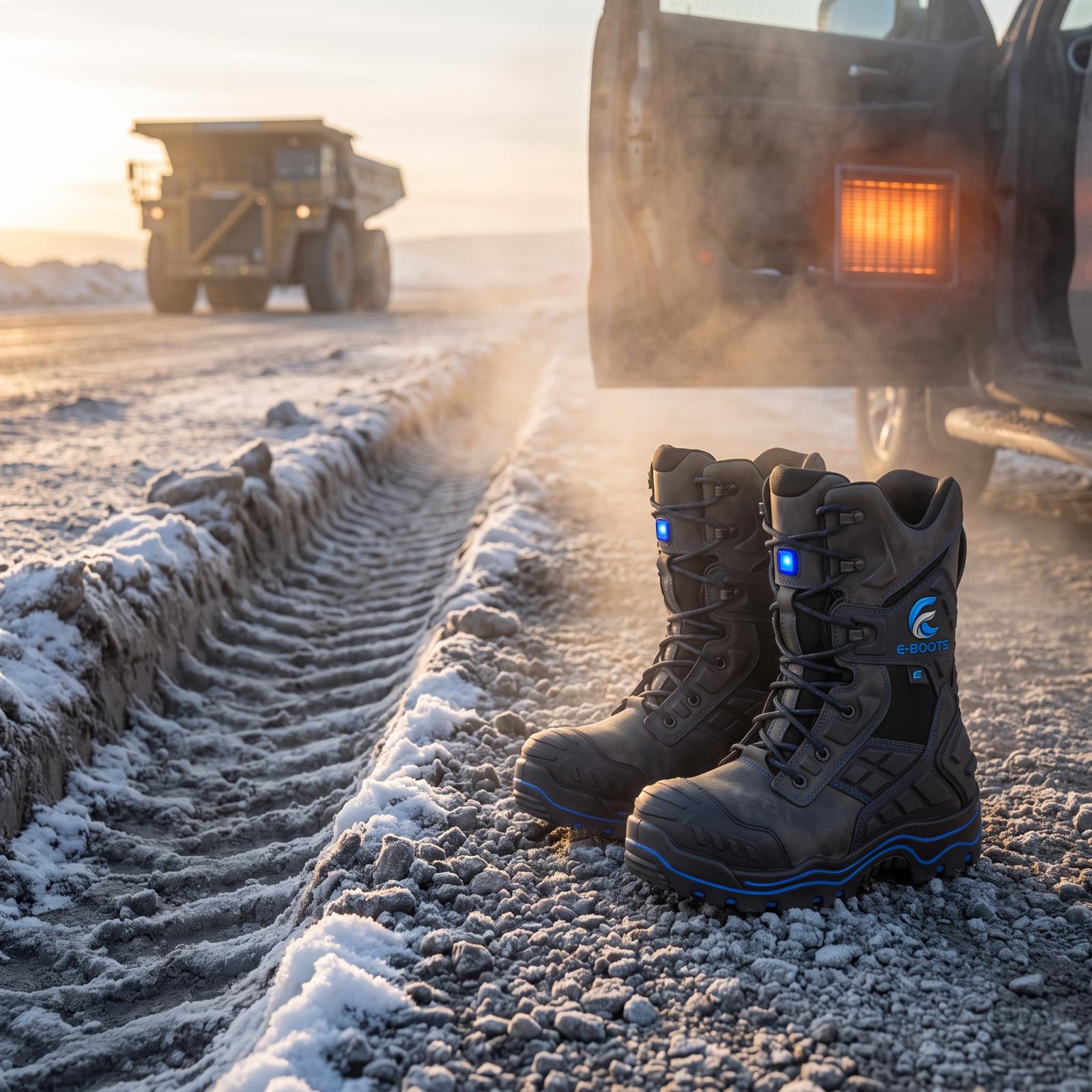
Protection is the other half of the equation. A tall boot is shaped to shield the lower leg from snow, slush and mud, and reinforced shells and aggressive outsoles are built for difficult ground.
Heated Work Boots Built for Industrial Crews and Outdoor Work
Crew work and outdoor work place different demands on footwear, but both ask for warmth, support and durability. If you are weighing full boots against add-on options, compare heated boots and heated insoles for winter work. On a jobsite, the priority is often all-day comfort, safety features and boots that hold up to abrasion. In remote or backcountry settings, the priority shifts toward traction, waterproofing and insulation for long periods outdoors.
E-BOOTS™ builds for both. The ForgeTherm Pro and Ironclad WorkOne serve industrial teams, while the SummitGuard, an all-weather smart hiking boot, and the Arctic Sentinel, a winter boot built for extreme cold, serve outdoor users. The Arctic Sentinel is one boot offered in two colourways, the standard finish and Arctic Camo.
For employers and safety leads, the platform also includes app-integrated GPS with live location, route recording, route history and geofencing. Wearers can view their own location, and a company administrator or safety team can optionally monitor it.
Start Your Early-Access Place for the E-BOOTS Heated Lineup
E-BOOTS™ is pre-launch, and our boots are not yet in field use. What we can offer is a clear plan: join the early-access waitlist at e-boots.com to be among the first to hear when the heated lineup becomes available, and to see the full specifications for the ForgeTherm Pro, Ironclad WorkOne, SummitGuard and Arctic Sentinel.
Frequently Asked Questions
Are heated work boots available with arch support?
Yes, heated work boots with arch support are a category worth looking at, but the two features do not always come together in one product. Many heated boots rely on insoles or a standard footbed, so arch support may need to be checked separately. When you compare options, check the footbed and whether the heating system leaves room for an orthotic or aftermarket insole. E-BOOTS is pre-launch, so confirm current feature details on e-boots.com before deciding.
What should I look for in heated work boots for long shifts?
For long shifts, focus on how the boot holds warmth across the whole day, how the controls work, and how the fit feels after hours on your feet. A high-cut design helps shield the lower leg from snow, slush and mud. Fit that works over your work socks matters. Heating controls that you can adjust are a useful feature on a busy jobsite. Check the protective toe and the outsole grip for your specific site conditions.
Are heated boots or insulated boots better for cold-weather work?
It depends on the work. Insulated boots rely on their materials to hold in your body heat, which can work well in moderate cold with a steady level of activity. Heated boots add an active warming element that you can adjust, which may suit work in extreme cold, long stationary periods or conditions where feet cool quickly. Many workers choose insulated boots for mild winter days and heated boots for the coldest shifts. Think about your temperature range, how much you move, and how long you stand still.
How should work boots fit when wearing supportive insoles?
A boot with a supportive insole usually needs a little more room in the length and depth than a boot with a flat footbed. Try boots on in the afternoon, when feet have swelled slightly, and wear the socks you plan to work in. Check that your heel stays put, your toes have space at the front, and the arch support sits under the right part of your foot. Walk on a slope or stairs before you commit. If you add an aftermarket insole, make sure the boot still closes comfortably over it.


