

5 Heated Work Boots for Winter 2026 Built for Cold Shifts
Last Updated: October 26, 2026
Quick Summary
Heated work boots for winter 2026 pair built-in heating elements with a control system that adjusts warmth on the boot itself or remotely through an app. Look for dual-control heating, on-board sensors that regulate climate automatically, a lightweight composite protective toe and waterproof construction. Match the boot to your temperature exposure, activity level and safety requirements rather than a single headline rating.
- The global work boots market is estimated at USD 18.43 billion in 2026, forecast to reach USD 24.41 billion by 2033.
- Heated socks warm the foot only and add no shell, outsole or toe protection.
- The ForgeTherm Pro is a high-cut industrial boot with app heating and GPS features.
- The Ironclad WorkOne keeps a classic leather profile with the same smart platform.
- The Arctic Sentinel is pre-launch, so no one has worn it through a season in the field.
Table of Contents
- What to Look for in Heated Work Boots for Winter 2026
- How Heated Boots Work
- Heated Work Boots vs. Heated Socks
- Winter Work Boot Features That Matter on a Cold Shift
- 1. E-BOOTS ForgeTherm Pro: High-Cut Heating for Industrial Crews
- 2. E-BOOTS Ironclad WorkOne: Classic Leather Profile With Smart Heat
- 3. E-BOOTS SummitGuard: Connected Warmth for Winter Hikers
- 4. E-BOOTS Arctic Sentinel: One Winter Boot for Extreme Cold
- Frequently Asked Questions
What to Look for in Heated Work Boots for Winter 2026
The global work boots market sits at an estimated USD 18.43 billion in 2026 and is forecast to reach USD 24.41 billion by 2033, according to Coherent Market Insights' work boots market forecast. That growth tells you something useful: buyers are taking cold-weather footwear more seriously than they did a decade ago. At E-BOOTS, our heated work boots are designed around a simple idea, that warmth can be controlled by the wearer rather than fixed at the factory.
So what actually separates a boot worth wearing from one that disappoints? Four things matter most.
- Heat control you can adjust. Look for dual-control heating that works on the boot itself and remotely through an app.
- Climate regulation. On-board sensors that raise and lower heat as ambient temperature changes help hold comfort while protecting battery life.
- A protective toe. A lightweight composite toe is one option for industrial conditions.
- Waterproof construction. Slush, snow and mud are considerations on a winter shift.
Watch out: buying on a single temperature rating alone is a common mistake. Before committing to daily industrial use, readers can check whether heated boots are safe for daily industrial use. RefrigiWear's winter work boot buyer's guide argues that selection should match temperature exposure, activity level and safety requirements rather than one headline number.
How Heated Boots Work
Heated work boots are footwear with a heating element built into the boot and a control system that lets the wearer set warmth.
The system has three parts. On our boots, that controller works two ways: on the boot itself, or remotely through the E-BOOTS app over a secure custom Bluetooth connection. On-board sensors also read ambient temperature and adjust heat automatically, which is designed to hold comfort while protecting battery life. To understand how long heated boot batteries last, our guide covers what the battery is designed to do.
Heated Work Boots vs. Heated Socks
Heated socks and heated boots are different options to consider for your day.
Here is the honest trade-off.
| Option | What It Covers | Best For | Limitation |
|---|---|---|---|
| Heated socks | Foot only | Adding warmth inside existing boots | No shell, outsole or toe protection |
| Heated work boots | Foot plus lower leg | Full shifts in snow, slush and mud | A larger purchase decision |
On a jobsite where slush reaches the ankle and the ground is uneven, consider how the footwear's shell fits the conditions. For a deeper look at heated boots vs heated socks, that comparison can help you decide which system suits a cold shift.
Winter Work Boot Features That Matter on a Cold Shift
Match the boot to the conditions, not to the brochure. That is the single most useful rule we can give you, and it is the one most buyers skip. RefrigiWear describes insulated work boots in its range as covering conditions from subzero -60°F to milder 30°F temperatures, which shows how wide the span is within one category (RefrigiWear product range).
The features that earn their place:
- Tall protective shafts that shield the lower leg from snow, slush and mud.
- Reinforced shells and aggressive outsoles built for difficult ground.
- Dual adjustable straps for a secure fit over layered socks.
- Waterproof construction that keeps meltwater out rather than merely resisting it.
Waterproofing deserves its own look, and our guide to waterproof work boots for winter covers it in detail.
1. E-BOOTS ForgeTherm Pro: High-Cut Heating for Industrial Crews
The ForgeTherm Pro is a high-cut work boot built for industrial conditions. For a broader view, see our guide on how to buy industrial grade heated work boots. The high shaft is designed to help shield the lower leg from snow, slush and mud. Heating adjusts on the boot or remotely through the E-BOOTS app, and on-board sensors regulate heat as ambient temperature shifts.
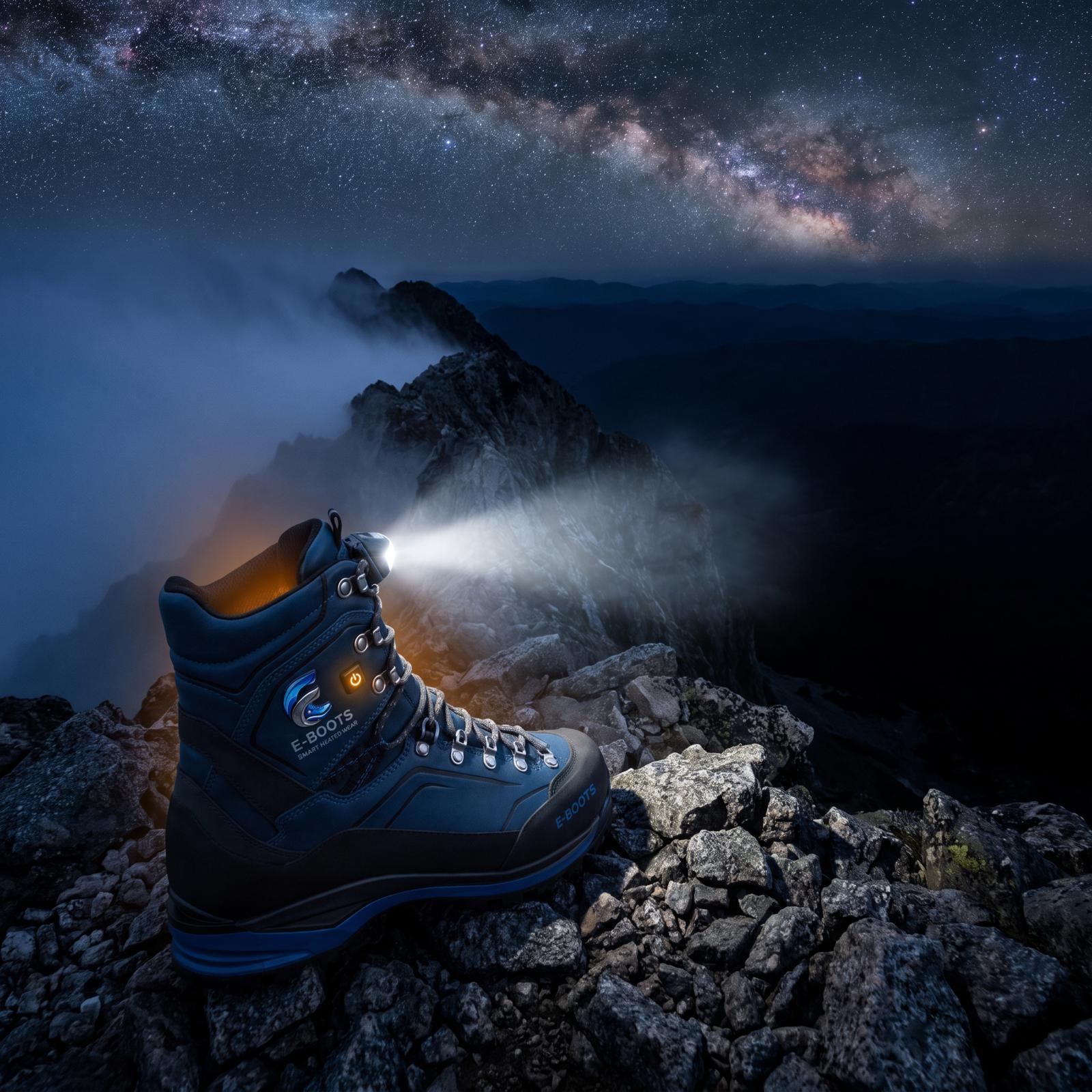
The boot uses a lightweight composite protective toe. App-integrated GPS includes live location, route recording, route history and phone-based geofencing, which the wearer can view and a safety team can optionally monitor.
Best for: industrial workers who want a high-cut heated boot with connected features. Skip if: you prefer a lower, more traditional profile, which is what the next boot offers.
2. E-BOOTS Ironclad WorkOne: Classic Leather Profile With Smart Heat
The Ironclad WorkOne keeps a classic leather work-boot profile and carries the same smart platform. Heating adjusts on the boot or through the app, sensors regulate climate automatically, and GPS features cover live location, route history and geofencing. It also uses a lightweight composite protective toe. This combination of high-tech safety and comfort provides a solid foundation for your wider selection of tough outdoor clothing.
Best for: tradespeople who want a recognizable work-boot silhouette with app-connected heating. Skip if: your site demands a high-cut shaft for deep slush.
3. E-BOOTS SummitGuard: Connected Warmth for Winter Hikers
Heating adjusts on the boot or through the app, sensors regulate climate based on ambient temperature, and GPS covers live location, route recording and geofencing. If you are weighing this against a work model, be clear that the SummitGuard is not a work boot.
4. E-BOOTS Arctic Sentinel: One Winter Boot for Extreme Cold
One thing we will not do is promise an outcome we cannot yet stand behind. These boots are pre-launch, and no one has worn them through a season in the field. What we can describe is what each feature is designed to do.
Frequently Asked Questions
What should I look for in heated work boots for winter 2026?
Start with how the heat is controlled: on the boot, through a phone app, or both. Check whether sensors adjust warmth automatically as the temperature changes. Look at the boot's height and shell for snow and slush protection, the outsole for grip on ice, and the toe construction if your site requires protective footwear. RefrigiWear's buyer guide also recommends matching the boot to your temperature exposure, activity level, and safety requirements rather than relying on one rating.
How do heated work boots work?
Heated work boots use integrated heating technology with controls on the boot or through a connected app. E-BOOTS models add on-board sensors that raise and lower heat as the ambient temperature changes, which is designed to hold comfort while protecting battery life. A secure Bluetooth connection links the boot to your phone. The heating technology is integrated into the boot.
What is the difference between heated work boots and heated socks?
Heated socks and heated work boots are different options to consider. E-BOOTS work and safety models use integrated heating technology and a lightweight composite protective toe.
How do you keep feet warm in work boots on a long shift?
Layer merino or synthetic socks rather than cotton, and avoid packing your boot so tight that circulation suffers. Choose a boot with a tall shell to help shield the lower leg from snow and slush. If your boot has integrated heating, its controls can adjust warmth on the boot or through an app, and on-board sensors can raise and lower heat as ambient temperature changes.
Are heated work boots suitable for wet winter conditions?
It depends on the boot's construction. E-BOOTS models are described as built with rugged waterproof construction, and the tall protective designs are shaped to help shield the lower leg from snow, slush, and mud.
Cold weather should not decide how long your day runs or how the shift feels. E-BOOTS builds heated work boots for winter with dual-control heating, automated climate regulation from on-board sensors, secure Bluetooth app connectivity and app-integrated GPS with live location and geofencing, all in a rugged waterproof build designed to help when temperatures drop. Join the early-access waitlist at E-BOOTS and be among the first to put a pair on when field wear begins.


