

Heated Boots for Search and Rescue: What Works
Table of Contents
- Why Heated Boots Matter for Search and Rescue
-
Best Boots for Search and Rescue: What to Look For
- Start With Mission Duration and Movement Pattern
- Insulation and Heat Retention: Passive First, Active Second
- Waterproofing and Wet-Weather Protection
- Traction and Outsole Grip on Unstable Ground
- Comfort and Fit Over Layers, Not on a Couch
- Durability and Field Maintenance
- A Short SAR Selection Checklist
- Heated vs Unheated Boots: When to Choose Each
- GPS Tracking Boots and Connected Safety Features
- Heated Boots with Adjustable Fit Over Layers
- Building Your SAR Boot Selection Checklist
- Frequently Asked Questions
Last Updated: October 21, 2026
Why Heated Boots Matter for Search and Rescue
Cold feet aren't just uncomfortable on a search and rescue mission, and heated boots for search and rescue address that reality directly.
Unheated boots, even insulated ones, lose warmth over time in extreme cold, and body heat alone cannot sustain comfort through a multi-hour mission in frozen terrain.
This guide covers what heated boots bring to SAR work, how to choose between heated and unheated options, and which features matter most.
Best Boots for Search and Rescue: What to Look For
Most boot guides for search and rescue read the same way: insulation, waterproofing, traction, comfort, fit. Those demands are real, but they leave out the part that decides whether a boot works on a mission: how it behaves when the mission changes shape halfway through.
This section treats boot selection as a mission-matching problem rather than a feature checklist.
Start With Mission Duration and Movement Pattern
Before insulation or traction, answer two questions: how long does a typical operation run, and what is the ratio of moving to standing still?
A short, fast mission on moderate terrain rewards a lighter boot with less insulation, because your body generates heat and the boot only has to hold it.
Insulation and Heat Retention: Passive First, Active Second
Insulation traps still air around the foot. Thicker insulation holds more warmth but adds bulk and reduces proprioception, the feedback from your feet that matters on uneven ground.
Heated boots do not replace insulation. They sit on top of it, adding active warmth when passive insulation reaches its limit: during stationary periods, in extreme cold, and on long missions where body heat generation drops.
Waterproofing and Wet-Weather Protection
Water conducts heat away from the body far faster than dry air, so a wet boot is a cold boot regardless of insulation. For SAR work, waterproofing has to survive wet snow, slush, stream crossings, and splash from a partner's steps.
Look for sealed seams and a membrane covering the full boot, not just the lower half.
Traction and Outsole Grip on Unstable Ground
SAR terrain is rarely a marked trail. It is snow, ice, loose rock, mud, and shifting vegetation, often in the same mission.
Outsole shape also affects crampon and traction-device compatibility. A boot with a pronounced heel welt and a stiff shank takes certain traction devices more cleanly than a soft, flexible boot.
Comfort and Fit Over Layers, Not on a Couch
Fit is where SAR teams actually lose people to blisters and cold feet. A boot that fits in the store changes after six hours of exertion, when feet swell and socks compress.
The heel should stay locked during downhill movement, since heel slippage creates friction blisters within hours.
Durability and Field Maintenance
SAR boots take abuse recreational boots do not: abrasion from rock, repeated wet-dry cycles, and scuffing from moving fast through brush. Reinforced shells and abrasion-resistant toe and heel counters extend service life.
Charging access, battery care, and cleaning around electronic components all become part of ownership. A team that cannot support that logistics chain is better served by an unheated boot with excellent insulation than by a heated boot that spends missions at partial charge.
A Short SAR Selection Checklist
Use this as a decision sequence rather than a shopping list:
- Define the mission profile: typical duration, moving-to-stationary ratio, and lowest expected temperature.
- Decide whether passive insulation alone covers that profile, or whether active heat is needed for the stationary and extreme-cold portions.
- Check waterproofing and collar height against the wet conditions your team actually faces.
- Verify outsole traction and compatibility with any traction devices or crampons the team uses.
- Fit the boot over the exact socks and layers used on missions, and walk it on uneven ground before committing.
- Confirm the team can support the boot's maintenance and charging needs.
The order matters. Teams that start with features tend to end up with a boot that scores well on paper and disappoints on the third hour of a stationary search.
Heated vs Unheated Boots: When to Choose Each
The heated-versus-unheated question is usually answered with a temperature threshold and a mission length, but the real decision turns on three things: how much of the mission is stationary, how cold the cold actually gets, and how much complexity the team can carry. Heated boots are not strictly better than unheated boots.
The Case for Unheated Boots
Unheated boots are simpler, and simplicity has real operational value. There is no battery to manage, no charging logistics, no electronics to protect from water and impact, and no failure mode beyond the insulation itself.
Unheated boots also suit teams with limited support infrastructure. A boot that needs charging is a boot that needs a charging plan, and a team without that plan is better served by gear it can rely on without thinking about it.
The Case for Heated Boots
Heated boots earn their place when the mission includes long stationary periods in extreme cold, when temperatures drop below the range where passive insulation holds, or when the mission runs long enough that body heat generation alone cannot keep the feet functional.
Heated boots also help team members whose circulation runs colder, whether from age, physiology, or fatigue. Active heat compensates for what passive insulation cannot deliver as individual physiology varies, a real consideration for teams with mixed ages and fitness levels.
The Trade-Offs Nobody Lists
Heated boots add weight, complexity, and a dependency on power. Those are not reasons to avoid them, but they are reasons to plan for them.
Weight and bulk affect mobility on technical ground, and a heavier boot changes your gait and fatigue curve over a long mission.
Battery Behavior in Cold and Spare-Power Planning
Battery capacity drops in cold, which means the runtime you get in the field is shorter than the runtime you get indoors.
Running at maximum heat drains power fastest and is rarely necessary for the whole mission. A common pattern is higher heat during stationary periods and lower heat while moving, which stretches runtime and matches heat output to actual need.
Failure Modes and What to Do If Heat Stops
Any powered system can fail, and a SAR team should know the response before it happens. The most common failure modes are battery depletion, water ingress at a seal, and physical damage to a heating element or connector from impact or abrasion.
If heat stops mid-mission, the boot does not become useless. It becomes an insulated boot, which is why insulation quality still matters in a heated boot.
A Decision Framework for SAR Teams
Use these questions in order:
- Is a meaningful portion of the mission stationary in extreme cold? If no, unheated boots are usually sufficient.
- Does the expected temperature fall below the range where the team's insulated boots hold warmth? If no, unheated boots remain viable.
- Can the team support charging, spare power, and maintenance? If no, unheated boots are the safer choice regardless of temperature.
- If heated boots are chosen, has the team planned heat settings, spare power, and a response to heat failure?
The honest answer for many SAR teams is that both belong in the kit, matched to the mission. That is not indecision. It is the same logic that puts a light boot and a heavy boot in the same locker.
GPS Tracking Boots and Connected Safety Features
Search and rescue work depends on accountability. Knowing where each team member is at any moment isn't just a convenience. It's a safety requirement. Connected boots that integrate GPS tracking let your incident commander monitor team position in real time and maintain communication even when radio signals are spotty.
Live Location and Route Recording for SAR Teams
Connected boots designed for SAR work can transmit live location data to a central dashboard, updating in real time as your team moves across the search area.
Route recording goes further. The boot logs your path, which can be reviewed after the mission to verify coverage or spot areas that were missed, and that record becomes evidence if the search operation needs to be analyzed or if a missed person was later found in a previously searched zone.
Geofencing and Administrator Monitoring
Geofencing lets you set virtual boundaries on a map. If a team member drifts outside the defined search area, an alert notifies the incident commander.
Administrator monitoring means your safety team can watch team position from a command post, vehicle, or office without being in the field to maintain accountability.
Heated Boots with Adjustable Fit Over Layers
The ability to adjust your boot's fit over heavy thermal layers is non-negotiable for SAR work. You're wearing thick socks, possibly gaiters, and heavy pants. Your boot needs to accommodate all of that without creating pressure points or cutting off circulation.
Dual-Control Heating and Climate Regulation
Heated boots designed for extreme conditions typically offer two control methods: physical controls on the boot itself, or a connected app on your phone to adjust temperature remotely.
Climate regulation goes a step further. Onboard sensors detect ambient temperature and automatically raise or lower heat to maintain comfort while protecting battery life, so you're not constantly adjusting settings as conditions change.
Battery Runtime and Cold-Weather Performance
Battery life in cold is different from battery life in a climate-controlled setting. Cold slows chemical reactions inside batteries.
Look for boots with replaceable or quickly rechargeable batteries. If a mission is expected to run longer than the battery can support, you need a way to swap in fresh power without removing the boot.
Building Your SAR Boot Selection Checklist
When you're evaluating boots for your SAR team, use a framework that prioritizes the features that matter most in your operating environment.
Start with temperature range: the lowest temperature your team regularly faces determines whether heated boots are essential or optional.
Fit matters more than any single feature.
Finally, consider your team's maintenance capacity. Connected boots require charging infrastructure. Heated systems need battery management.
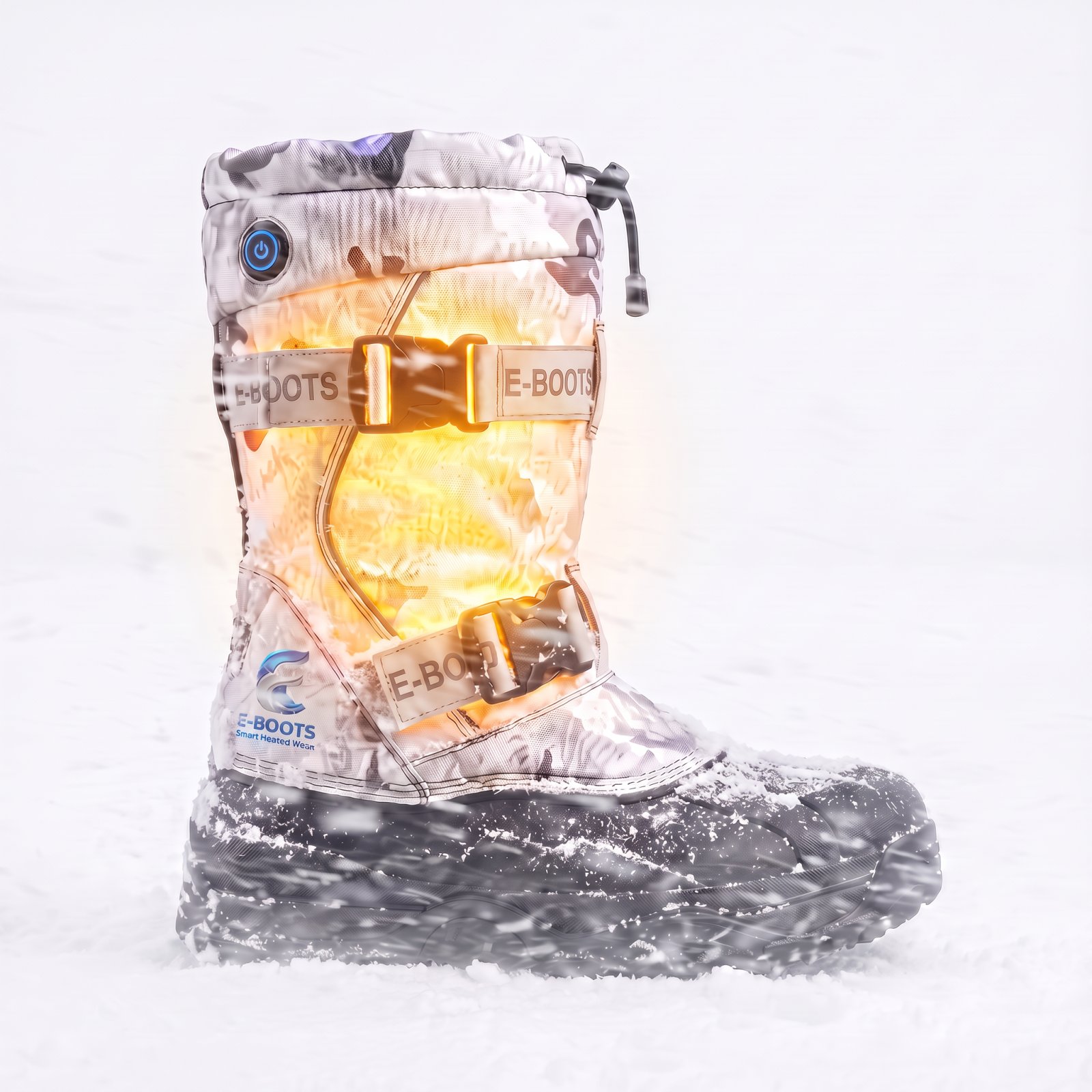
Cold feet cut SAR missions short and put team safety at risk. E-BOOTS™ has designed the Arctic Sentinel specifically for extreme cold work and rescue operations, integrating heated insulation with GPS tracking and app-controlled warmth.
Frequently Asked Questions
Are heated boots suitable for search and rescue work?
Heated boots can support SAR missions in extreme cold by maintaining foot warmth during long operations. They're designed to help when temperatures drop significantly, which is common in rescue scenarios. The key is choosing a boot built for rugged terrain with reliable heating that doesn't compromise traction, durability, or the ability to move quickly across difficult ground. Battery runtime matters, so confirm your boot's design supports the length of missions your team runs.
How do GPS tracking boots help search and rescue teams?
GPS-enabled boots allow SAR teams to track live location, record routes, and access route history through an app. Team leaders can set up geofencing to monitor when personnel enter or leave designated zones. This connected capability is built into the boot itself, so it doesn't require additional wearable devices. For rescue operations, having reliable location data and route recording helps coordinators understand team movement and terrain covered during multi-hour or multi-day missions.
What should heated boots for search and rescue cost, and are there bulk discounts for teams?
Pricing for heated boots with advanced features depends on the specific model, quantity ordered, and current availability. For teams outfitting multiple personnel, bulk purchasing often qualifies for different pricing structures. Contact E-BOOTS directly at e-boots.com for current pricing and to discuss options for equipping your SAR crew. They can provide quotes based on your team size and specific mission needs.
How do I know heated boots will actually keep my feet warm during a long rescue mission?
Heated boots are designed with dual-control heating that adjusts warmth either on the boot itself or through the app. Automated climate regulation uses on-board sensors to raise and lower heat as ambient temperature changes, protecting battery life while maintaining comfort. The boot is built to help when temperatures drop, but actual warmth performance depends on the specific model, mission duration, battery capacity, and layering strategy. Review the technical specifications for your chosen boot and plan your battery use around expected mission length.


